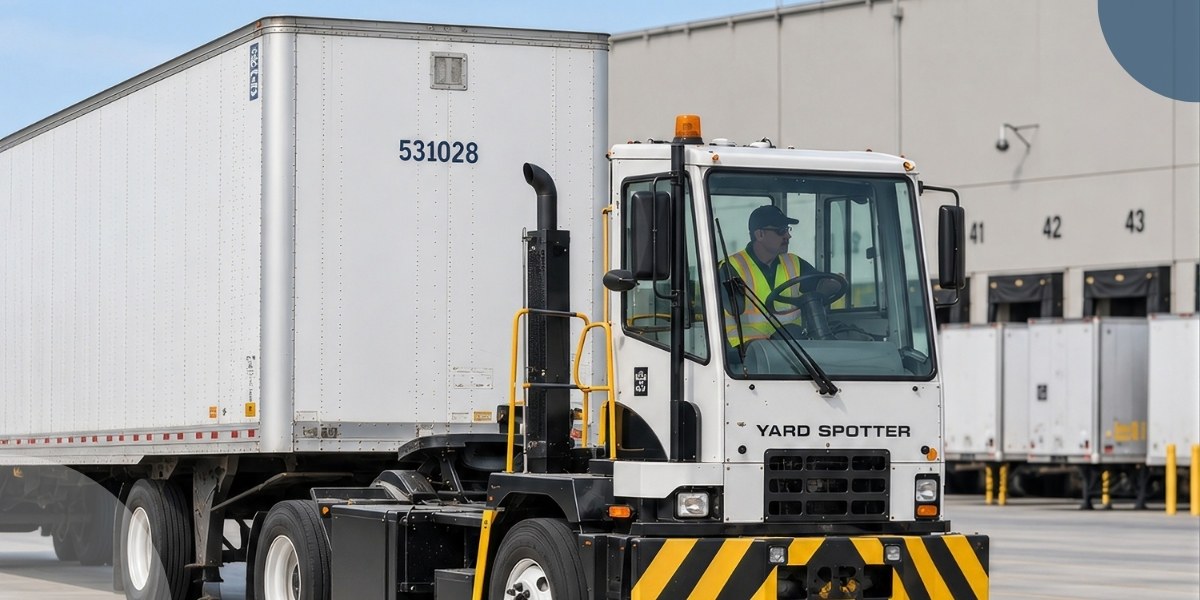
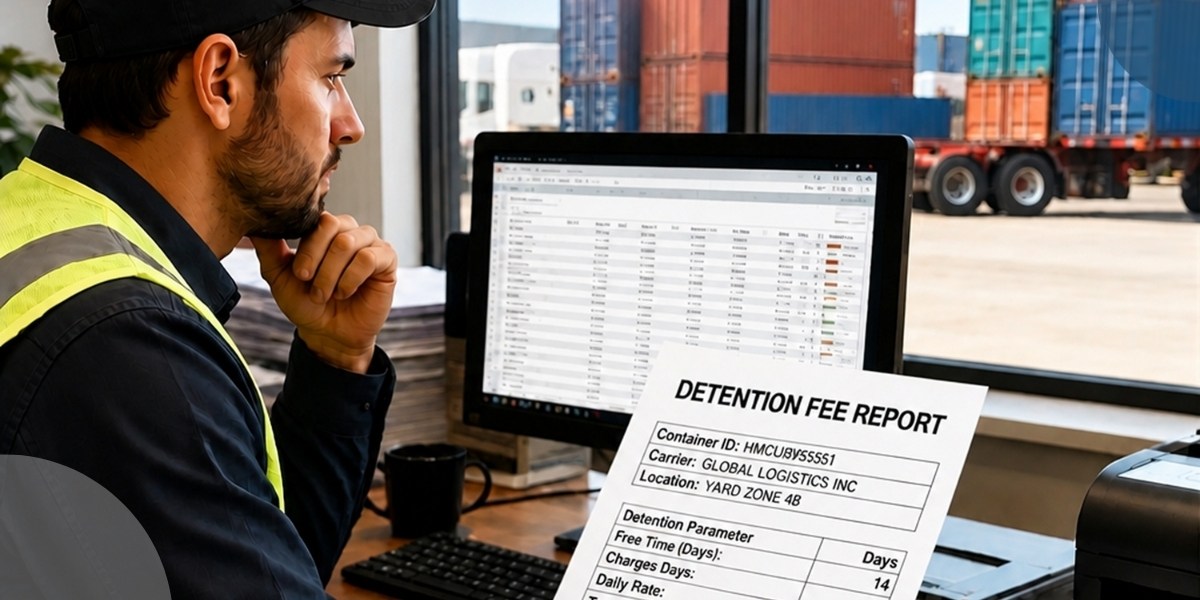
Detention and demurrage are the fees a facility can most directly control, and also the ones that most often land on an invoice with no clear explanation. A trailer can sit an extra two hours at a dock, a container can wait three days for a chassis, and the charges arrive weeks later, after the window to prevent them has passed.
This guide breaks down what each fee is, the typical ranges, why they keep climbing, and how a yard management system turns them from a surprise into a number your team can see and challenge.
What Are Detention, Demurrage, and Per Diem Fees?
Demurrage, detention, and per diem are penalty fees charged in shipping and logistics when cargo or shipping containers are kept past a set number of allowed "free days". All three are charges for holding equipment or cargo past an agreed free-time window.
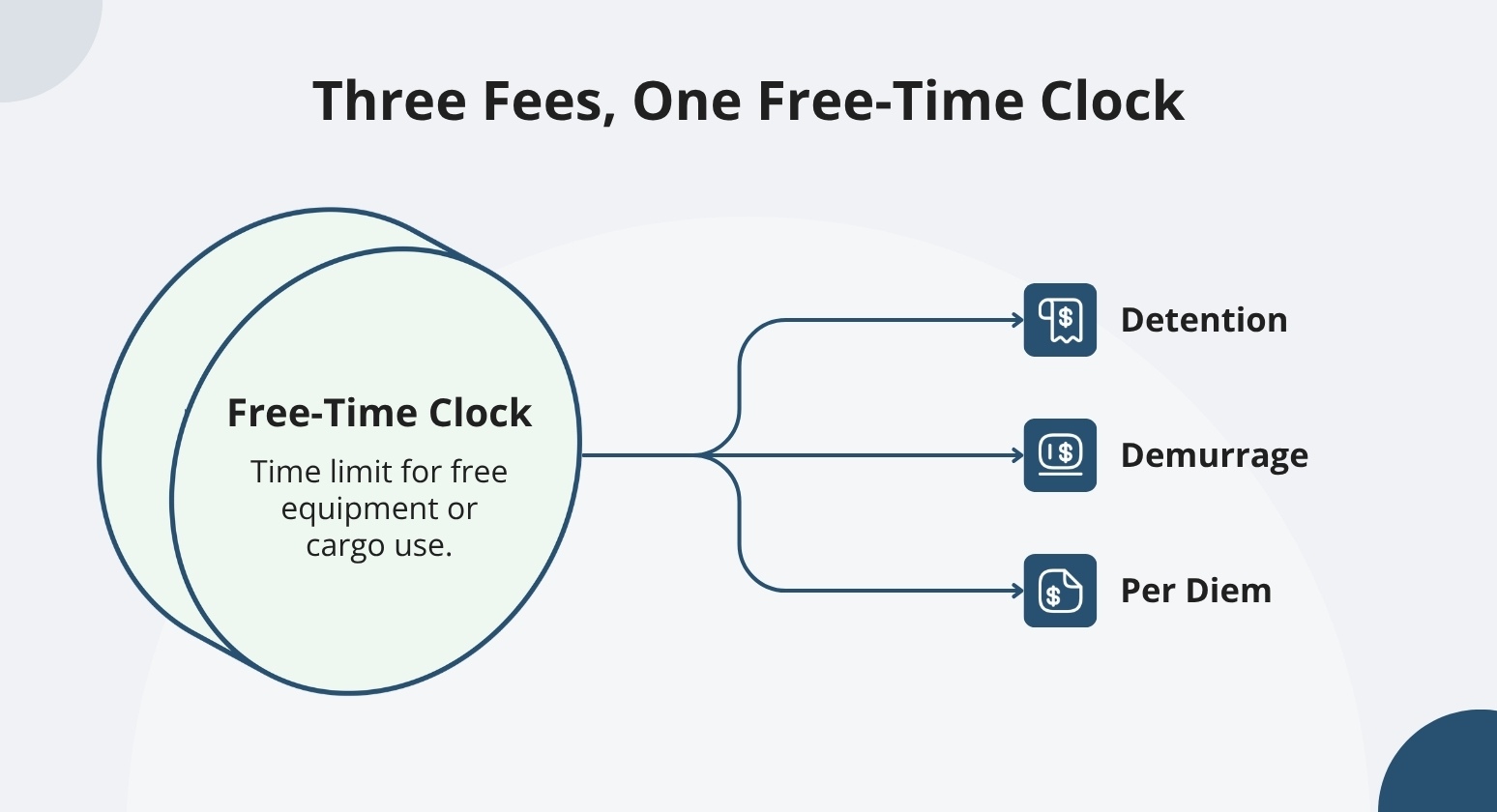
The difference lies in what is being held, where it is held, and who bills for it:
- Detention is charged when a driver and trailer are held at a facility past free time and is usually billed by the hour. In trucking, the carrier bills it. In ocean freight, it can also mean holding a container outside the terminal past free time.
- Demurrage is charged when a container sits inside the port or terminal past its free days, billed per day by the ocean carrier.
- Per diem is the daily charge for the container or chassis once it leaves the terminal, billed by the line or the equipment owner until the equipment returns.
They look very similar, but the quickest way to tell them apart is location. If the equipment is inside the terminal gates waiting to be picked up, that is demurrage. If it has left the terminal and is running late back, that is detention or per diem.
If a driver is stuck waiting at your dock, that is trucking detention. A container operation juggles all of them at once, which is exactly why the fees get confused and mischarged.
What is the Average Fee for Detention?
Trucking detention typically runs about $30 to $50 per hour and can reach $150 per hour at some shippers once a driver waits past the free window specified in the carrier contract. That free window is often two hours, so a driver who sits four hours can leave with two chargeable hours on the bill.
The rate looks small until you multiply it across a fleet and a year. The American Transportation Research Institute estimates that driver detention cost trucking $15 billion in 2023, with drivers held past free time in roughly 39 percent of stops.
What is the Average Fee for Demurrage and Per Diem?
Demurrage runs per day, typically $75 to $300 per container, and can climb higher at congested ports or during peak season. Most terminals allow three to five free days before it starts, though the exact number depends on the terminal and the contract.
Per diem is also a daily charge applied to the container or chassis after it leaves the terminal and remains until it is returned. Because both accrue by the day, the single most expensive thing you can do is lose track of which box crosses its threshold on which date.
Why Detention and Demurrage Fees Keep Climbing
Three forces push these charges up. Volume and congestion mean more equipment waiting in the same space. Tighter carrier capacity means carriers enforce detention more strictly to protect driver hours. And regulation has sharpened the billing.
In 2024, the Federal Maritime Commission's final rule on demurrage and detention billing took full effect on May 28. It requires carriers and terminals to issue invoices within 30 days of the charge, and it gives billed parties at least 30 days to request a refund, waiver, or fee mitigation.
The rule does not lower fees, but it does give a well-documented dispute a defined window and a clearer standard, rewarding facilities that keep accurate records. The fee is only part of the cost. Long dwell also carries safety and relationship costs that do not show up on the bill.
A U.S. Department of Transportation study found that a 15-minute increase in the time a truck spends at a facility raises the average expected crash rate by 6.2 percent, and tied detention to a $1.1 billion to $1.3 billion reduction in annual earnings for truckload drivers.
Drivers remember which facilities cost them hours, and in a tight market, a yard with a reputation for long waits struggles to attract capacity. Reducing dwell protects your carrier relationships as much as your budget.
Watch: Stop Paying for Detention & Demurrage #logistics #yms #logisticsolutions
Short clip directly addresses stopping detention and demurrage fees, the article's core topic.
How to Reduce Detention and Demurrage With a YMS
You cannot rewrite a carrier's free-time terms, but you can see the clock and act before it trips.
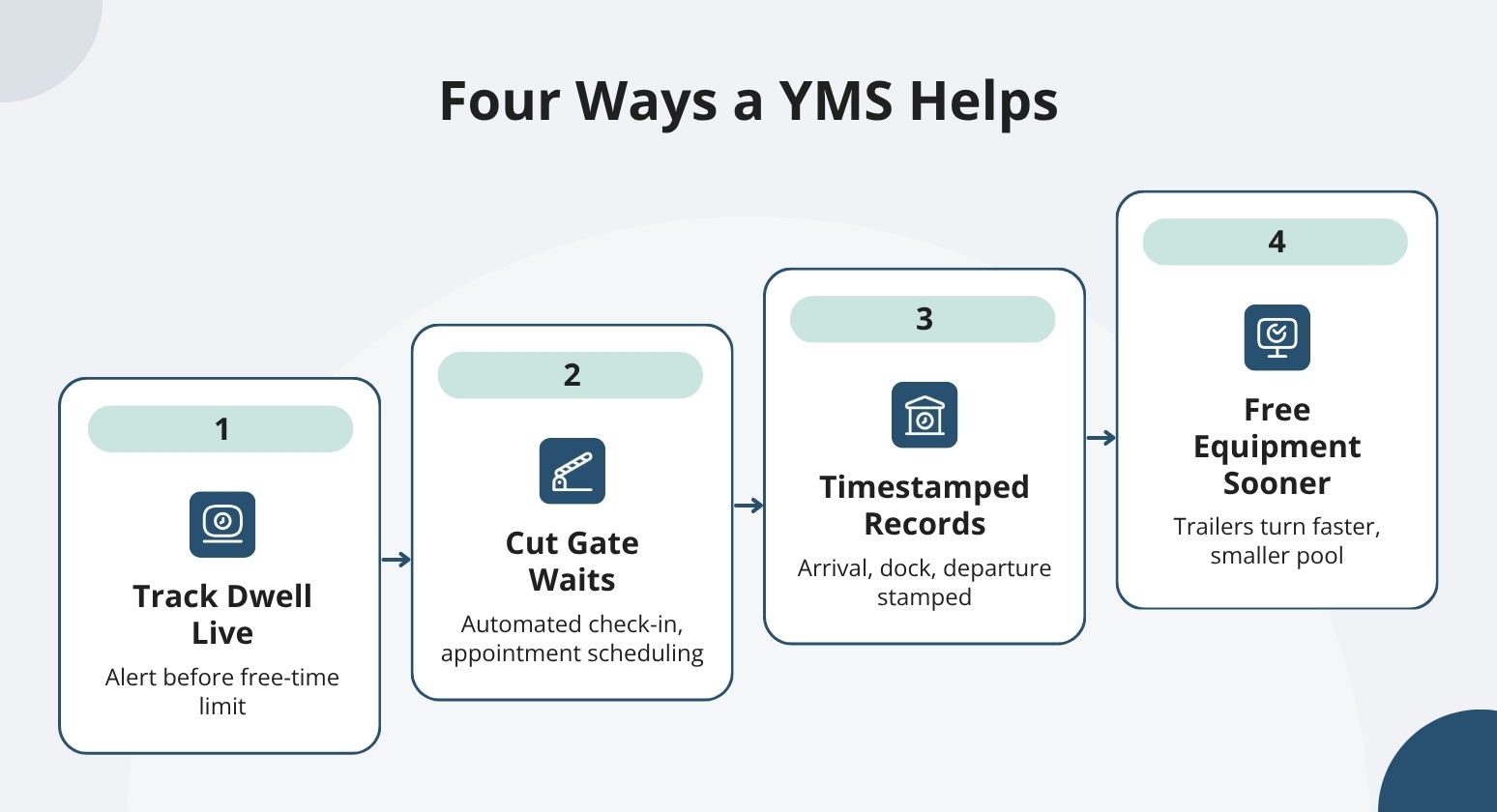
A yard management system helps in four ways:
- Track dwell in real time: Know how long each trailer and container has been on-site and get an alert before it approaches its free-time limit, so you can prioritize the move while you still have time.
- Cut the wait at the gate and dock: Faster turnaround starts with automated check-in and carrier appointment scheduling that spreads arrivals throughout the day rather than bunching them into a single gate hour.
- Keep a timestamped record: Every arrival, dock, and departure is stamped with a time and an operator, so you can check a disputed charge against your own tracked data rather than someone's memory.
- Free up equipment sooner: Directing moves so trailers turn faster reduces the leased pool you carry and the demurrage clock you feed.
None of these is a silver bullet on its own. Together, they turn dwell from something you find on an invoice into something you track and manage in the moment, gate by gate and carrier by carrier.
That is where a system built for the yard, like YardView, earns its place. YardView YMS cuts detention and demurrage fees by tracking asset dwell times against free-time limits, automating gate check-ins, scheduling dock doors, and sending proactive alerts before idle trailers incur extra charges.
Cut Your Detention and Demurrage Fees With YardView
Detention and demurrage no longer come as a surprise when the clock is visible, and every event is recorded. YardView runs detention and demurrage as a dedicated capability, built into the gate, yard, and dock workflows your team already uses:
- Real-Time Dwell Tracking: Monitors how long each trailer and container has been on-site, so mounting charges are visible before they escalate.
- Proactive Threshold Alerts: Fire detention and demurrage notifications before fees begin accruing, giving your team time to act rather than react.
- Timestamped Audit Trails: Capture a time-and-operator record for every gate, yard, and dock event, so a disputed charge is backed by evidence.
- Billing Reconciliation: Tie tracked dwell and event data to charge validation, ensuring invoices are matched to what actually happened in the yard.
- Detention and Demurrage Analytics: Deliver dedicated reporting and dashboards with scheduled email delivery, turning raw dwell data into a number you can manage.
See how YardView's detention and demurrage tracking turns these fees from an unavoidable cost into a controllable number.
FAQs:
What Is the Difference Between Detention and Demurrage?
Location is the simplest test. Demurrage applies when a container remains at the terminal beyond its free days. Detention applies once the equipment leaves the terminal, or, in trucking, while a driver and trailer wait at a facility past free time. Per diem is the daily equipment charge that applies to a container or chassis from the time it leaves the terminal until it is returned.
How Are Detention and Demurrage Fees Calculated?
Each starts when free time expires and accrues per hour or per day until the equipment moves. Detention is usually hourly, often $30 to $50, after a free window of about two hours. Demurrage is per day, commonly $75 to $300 per container, after three to five free days. Many terminals also step the rate up the longer an asset sits, so days six and seven can cost more per day than the first chargeable day.
Can You Dispute Detention and Demurrage Charges?
Yes, and documented evidence is what wins. Under the FMC's 2024 billing rule, invoices must be issued within 30 days, and billed parties have at least 30 days to request a waiver or mitigation. To make that window count, you need proof of exactly when the equipment arrived, was worked on, and left. A timestamped record from your yard system gives you that proof, so you can pull a charge, match it against your own events, and see where the numbers diverge.