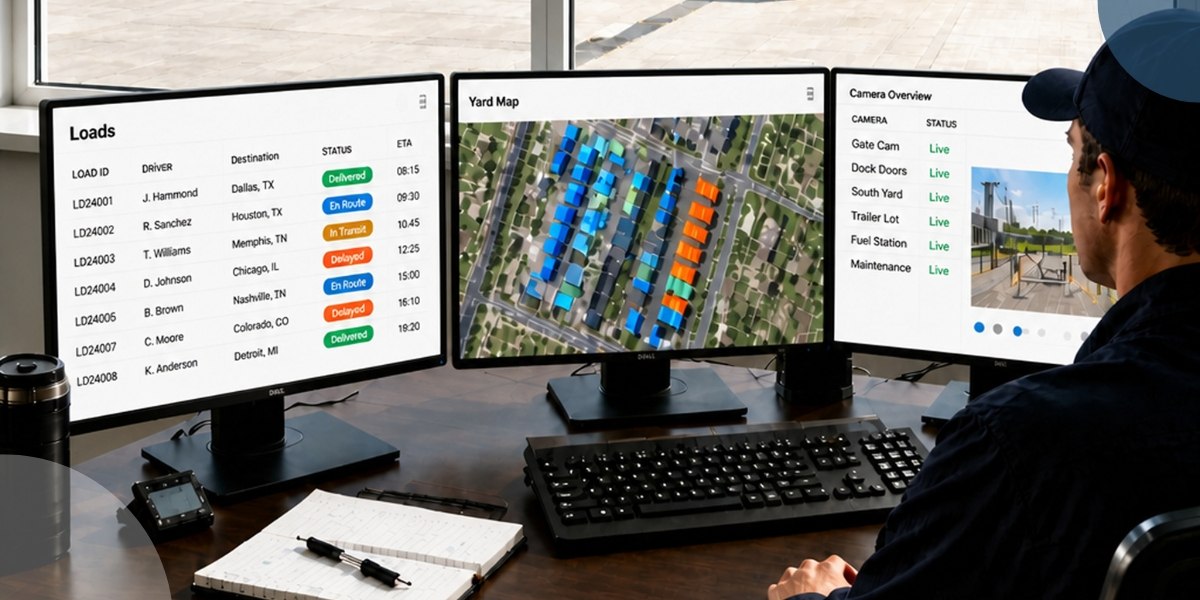
If your network spans multiple client sites, detention fees and overtime may already be showing up in your P&L. The real problem isn't your team's execution; it's informational.
Every site reports data in its own way. That makes it hard to judge performance. Without automated timestamps, you can't confidently verify carrier invoices or spot which sites drive up costs. As a result, leadership meetings run on anecdotes.
We help you change that with accurate yard visibility. We bring 28 years of experience to help you solve these tracking headaches and give you total relief. Dwell time by facility and idle trailer counts give operations leaders a measurable number to act on, not a gut feeling.
What Is 3PL Yard Visibility?
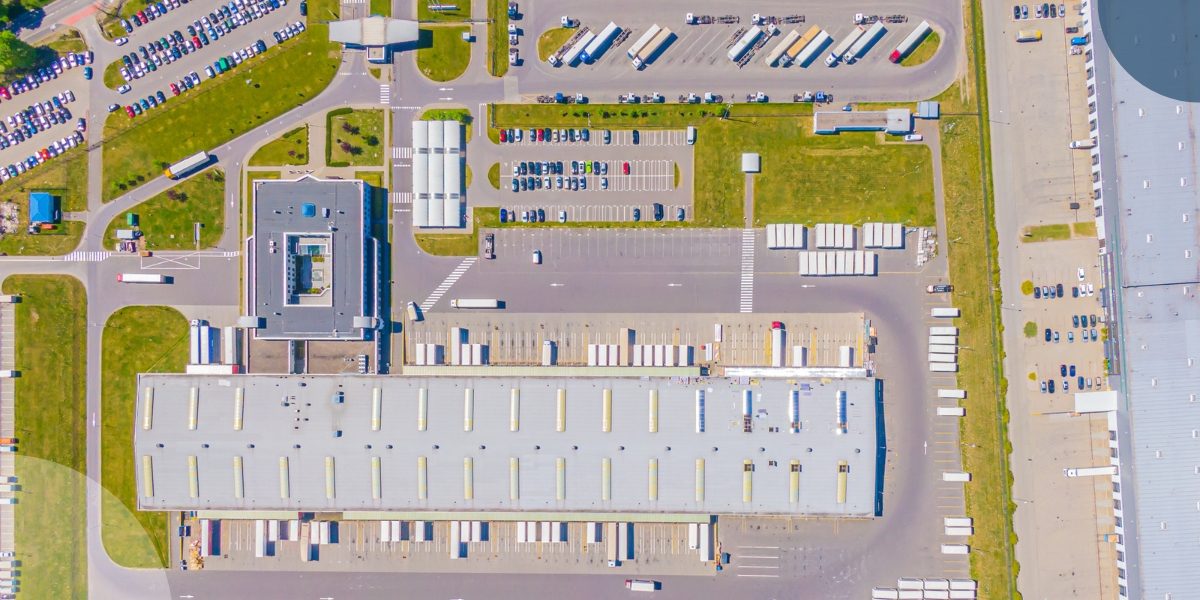
3PL yard visibility is the use of software to track operations in real time. It follows every trailer, container, truck, and shipment in a yard. It sits between transportation and warehousing — the point where TMS tracking ends and WMS inventory control has yet to begin.
Without it, trucks wait extended periods for dock assignments, containers sit idle with no one accountable, and yard teams make decisions based on last-known position rather than current state. Accurate visibility closes that gap.
The Yard is The Last Blind Spot Between Your WMS and TMS
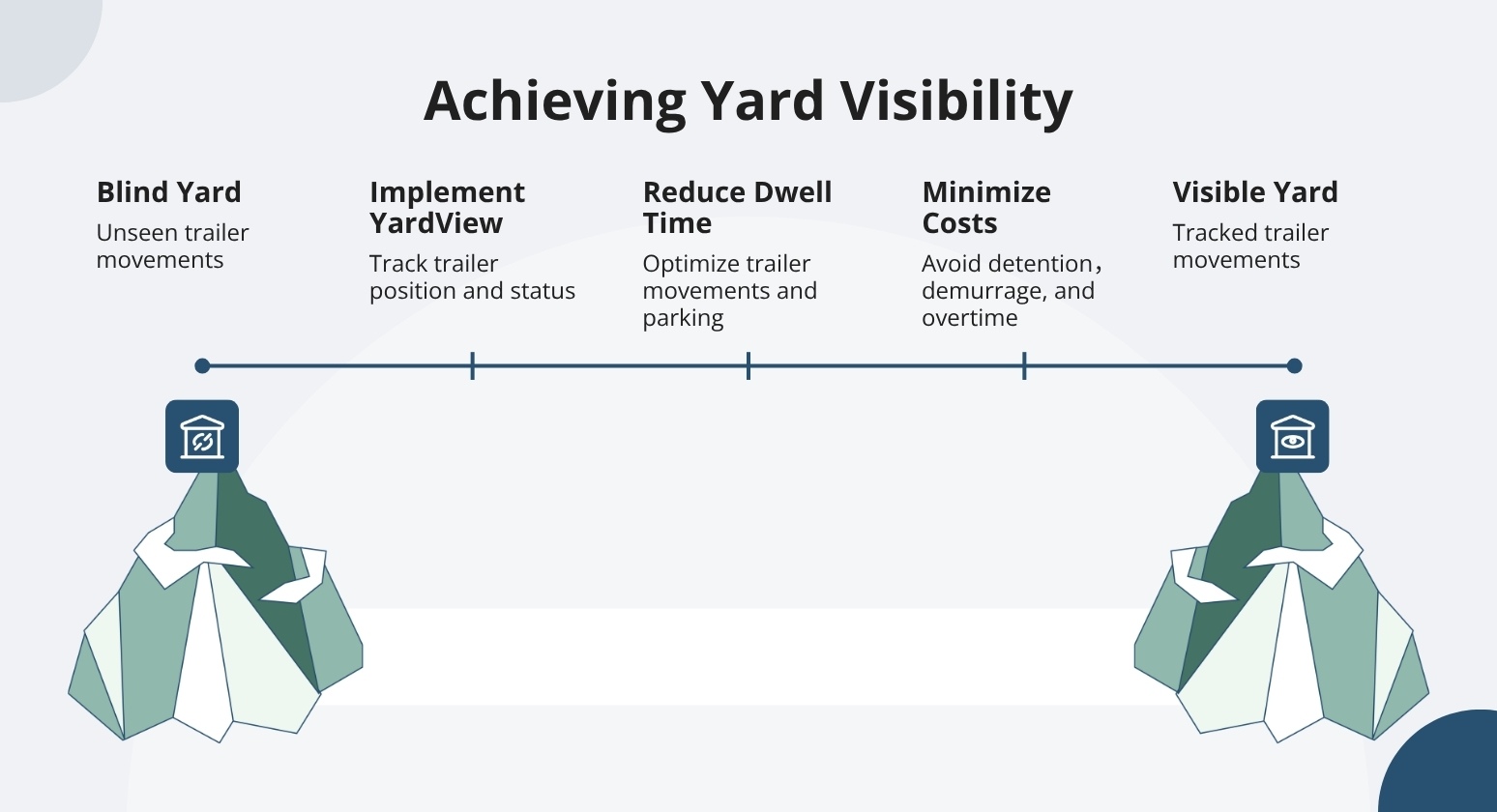
If your stack includes a WMS and a TMS, you have strong coverage on both sides of the yard. The WMS loses track of the dock door. The TMS loses track at the gate.
What happens between those two points — trailer position, dwell time, move status — may not be visible to either system. At YardView, we think this is the missing link.
For 3PLs, a lack of yard visibility can lead to direct, unexpected costs. When dwell times and asset positions aren't tracked in software, D&D fees can accumulate before they're flagged. Excessive trailer dwell can easily go unseen until carrier invoices arrive. Over time, it follows the same pattern.
YardView's customer data suggests these costs can surface quietly across multiple client sites. When costs accumulate undetected, the exposure can be significant.
How 3PL Yard Visibility Works in Real Time
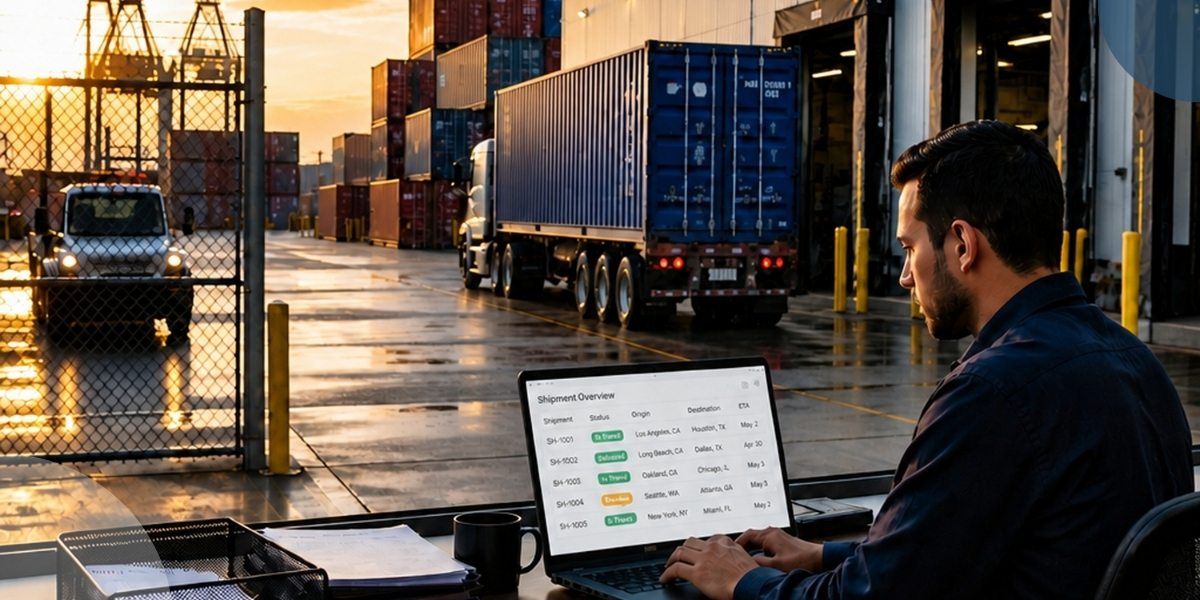
Real-time yard visibility connects three operational zones — gate, yard, and dock — into a single, accurate picture. When a trailer's dwell time climbs, or a dock door sits idle, teams can see it immediately and act before it creates a delay or triggers a fee.
The gate, yard, and dock are all parts of a connected sequence. At the gate, software captures arrival times, carrier identities, and trailer statuses. That data helps guide the yard team's next decisions. In the yard, the system tracks where each asset sits and how long it has been there.
That data then drives dock sequencing. Finally, at the dock, the software records when a trailer is assigned, opened, and released.
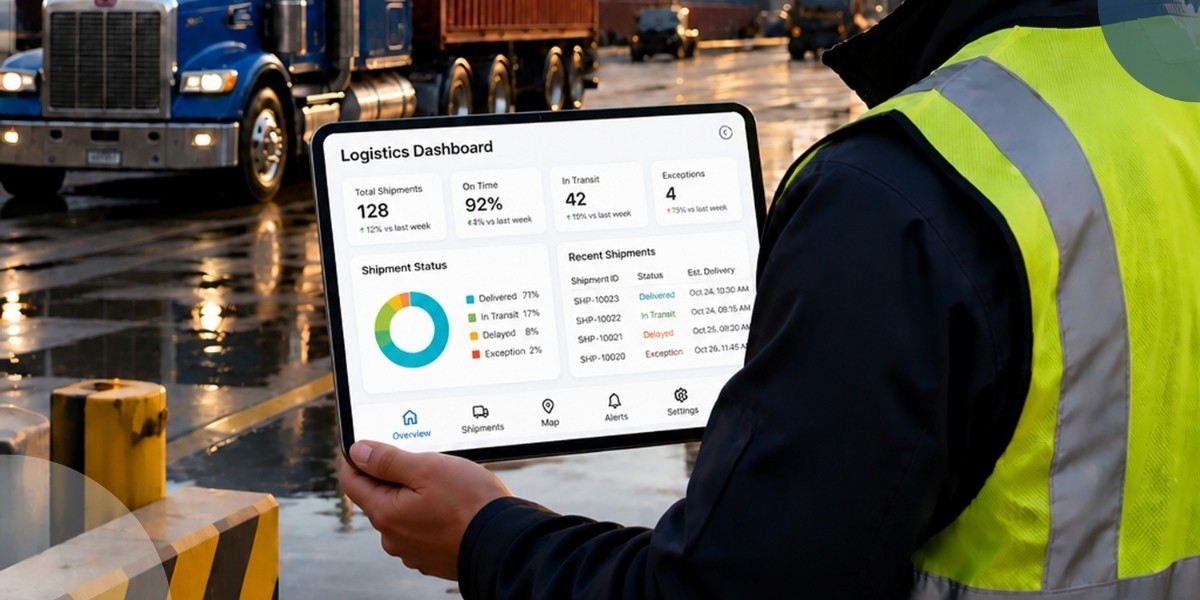
If your gate, yard, and doc feed a single accurate view, supervisors can act on the current state, not a count from the previous shift. This central dashboard view shows you dwell time by location and which trailers have been sitting the longest.
Connecting the Yard to Your Existing Stack
If your stack already includes a WMS, TMS, or ERP, a robust YMS connects to those systems rather than replacing them.
YardView fills the gap those platforms leave behind. It may protect the value of investments you've already made.
Why YMS, WMS, and TMS Integration Creates a Synchronized Ecosystem
Each system covers its own lane well. The WMS manages inventory inside the warehouse. The TMS tracks carriers and freight in motion. Neither can see what happens between the gate and the dock door.
When those systems aren't connected, the gap can lead to delayed dock assignments and missed dwell windows. Synchronizing YMS, WMS, and TMS closes it, giving teams one accurate picture across all three.
The Role of the WMS
The WMS manages inventory flow and warehouse operations. Its accurate visibility stops at the dock door. Once a trailer enters the yard, the WMS can no longer confirm its position, dwell time, or status.
The YMS is the missing link that fills this gap — connecting to the WMS via API to add gate tracking, asset location, and dwell monitoring where the WMS leaves off.
The Role of the TMS
The TMS manages transportation planning and carrier execution. It tracks shipments from origin through to the facility gate.
Once a truck crosses into the yard, the TMS may lose physical visibility of where that asset sits, how long it waits, or when it reaches a dock door. That gap is where yard-level tracking begins.
The Neutral YMS Layer: Why Independence Matters for 3PLs
3PLs rarely run a single client on a single system. When each client brings a different WMS or TMS, a neutral YMS serves them all without belonging to any one stack.
YardView connects to SAP, Manhattan Associates, Blue Yonder, Oracle, and Trimble via API. Its single-tenant setup keeps each client's data isolated. Data stays separate, no matter what system sits beside it.
Implementing Yard Visibility Without Disrupting Operations
Before configuration begins:
- Map the full trailer lifecycle gate-in to gate-out — understand the complete sequence of moves before deciding what any system needs to do.
- Document every handoff, wait, and move in the current yard — you need a clear picture of what exists before you can determine what to change.
- If handoffs lack documentation, identify precisely what information is missing at each point — and why that gap creates downstream risk.
Before selecting a tool:
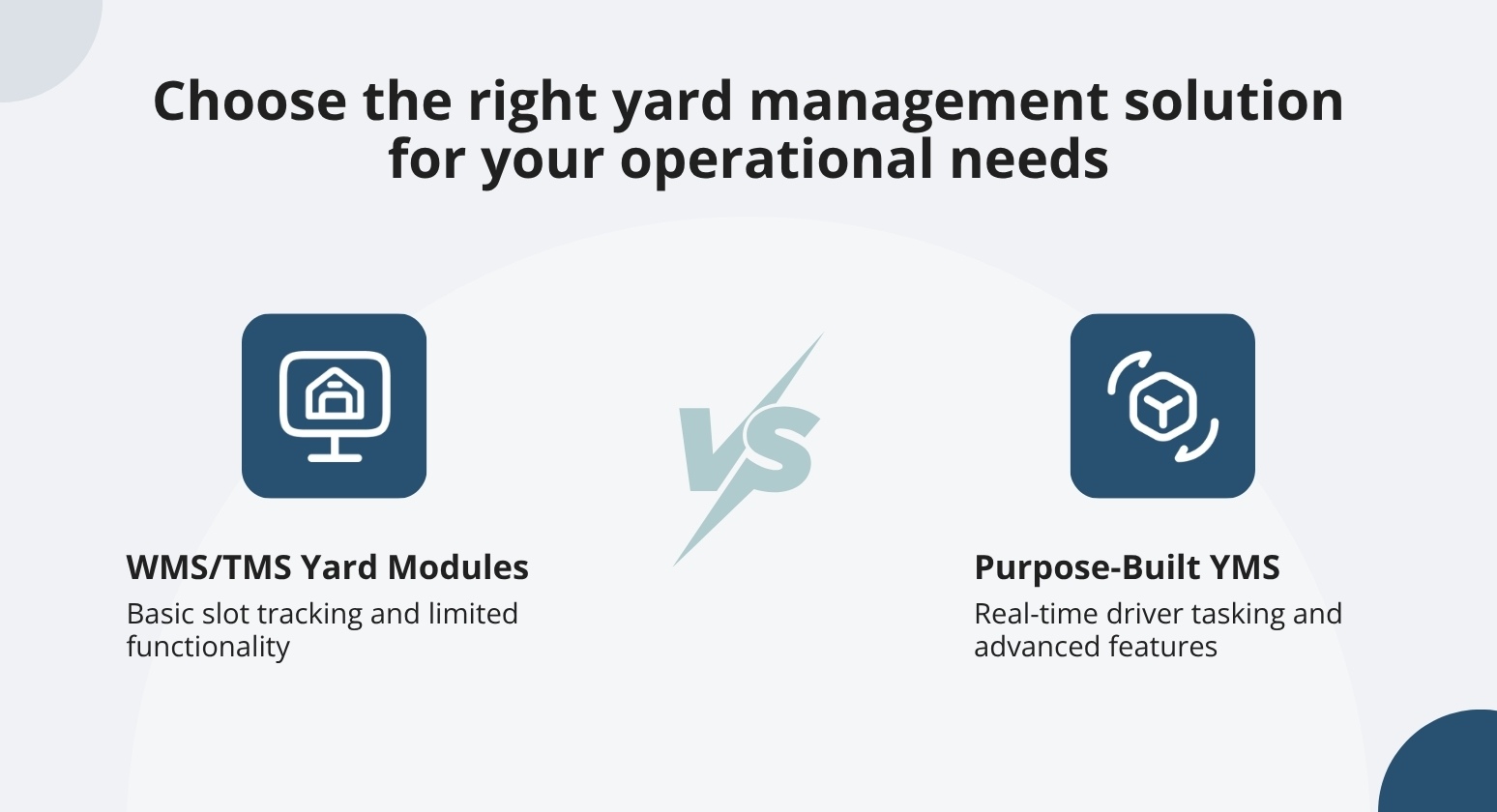
- Evaluate whether a WMS or TMS yard module meets your operational needs — or whether a dedicated YMS is warranted.
- WMS and TMS yard modules typically provide basic slot tracking but may lack real-time driver tasking, next-best-move logic, post-arrival dwell monitoring, and D&D management.
- Manual workarounds in bundled tools can drive longer dwell times and untracked detention exposure — costs that never appear in the license fee.
- If your yard handles complex trailer flow, a purpose-built YMS like YardView may make financial sense.
When digitizing yard operations:
- Move gate activity, asset positions, driver moves, and inspection records off paper and radio — once digitized, yard teams can see exactly where a trailer is and how long it has been sitting.
- Gate staff can confirm a trailer's status at handoff without a radio call or a clipboard search.
- Radio communication creates no audit trail, no safety prompts, and no dwell tracking, and important operational knowledge walks out the door when the worker leaves.
YardView Brings Your Network Into Focus
If you manage multiple client sites, scattered yard data can quietly shrink your profit margins before you ever see the invoices. YardView's enterprise-wide platform gives network leadership a single place to see what's actually happening — and act on it.
- Enterprise network views: YardView surfaces multi-facility rollups and facility-level benchmarking in one dashboard, replacing anecdote-driven leadership meetings with actual dwell times, idle trailer counts, and gate activity by site.
- Detention & demurrage module: YardView tracks dwell in real time, fires proactive alerts before fees trigger, and generates timestamped audit trails to support invoice verification — customers report up to 95% reduction in D&D fees.
- Automated scheduled reporting: YardView delivers role-based reports to inboxes hourly, daily, or weekly, saving key resources up to 8 hours per week.
- Full transaction history: YardView stores every gate, yard, and dock event — not snapshots — building a complete audit trail across every client site.
- Leased trailer pool reduction: YardView's asset utilization tracking may help operations reduce leased trailer pools by up to 25%.
Explore how these capabilities map to your network with YardView.
FAQs:
What Does Supply Chain Visibility Require?
Supply chain visibility requires current data from every node — gate, yard, dock, warehouse, and carrier. When the TMS and WMS aren't connected to the yard, dwell times and trailer positions stay hidden until invoices arrive. A complete transaction history, not periodic status snapshots, is what allows teams to verify charges and make informed sequencing decisions.
What Is Real-Time Visibility in Logistics?
Real-time visibility in logistics means tracking assets, shipments, and transactions continuously — based on where they are now, not where they were at the last check-in. It shows the current trailer position, gate status, and dock activity so teams can make decisions based on the current state. For many operations, the yard is where that picture goes dark.