Most yard problems do not announce themselves. They show up quietly, as an extra hour of overtime here, a detention charge there, a driver who cannot find a trailer. Each one looks small enough to live with, so the fix keeps getting pushed to next quarter.
The trouble is that these costs compound while you wait, and the yard rarely gets less busy on its own.
So the honest answer to "when is the right time" is usually sooner than it feels. This guide walks through the signs that it is time, what waiting actually costs, the objections that keep yards stuck, and how to start without disrupting the operation you are trying to fix.
The Signs It Is Time to Act on Yard Management
You do not need a formal audit to know the yard is straining.
A few patterns tend to show up together:
- Your team runs the yard on spreadsheets, radios, paper logs, or a tool that was never built for the job.
- Drivers spend their shifts hunting for trailers, and the yard count is stale by mid-morning.
- Detention and demurrage charges keep landing without a clear way to validate or dispute them.
- You lean on overtime, temp labor, or extra yard-dog rentals to keep trailers moving.
- No one can say for certain who moved a trailer, or when, without stitching together three partial records.
If several of these sound familiar, the signs are already there. The question is no longer whether the yard has a problem, but how much longer it is worth paying to have it done by hand.
What Waiting Actually Costs
Delay is not free, even when it feels like the safe choice. The costs of a chaotic yard accumulate across several lines at once, and none of them appear as a single invoice you can point to.
Detention and demurrage keep climbing. Industry data from ATRI puts detention at roughly 39 percent of deliveries, and a U.S. Department of Transportation study tied longer dwell to a 6.2 percent rise in crash risk for every 15 minutes a truck spends at a facility, along with a $1.1 billion to $1.3 billion cut in annual driver earnings.
Long waits also cost you goodwill with your carrier. In a tight market, a yard known for long dwell times struggles to attract the capacity it needs.
Then there is the labor you spend covering the gap: overtime, manual paper-and-radio work, and slow gate lines that stretch truck turnaround times. Every week you wait is another week of paying those costs at full price.
The Objections That Keep Yards Stuck
If acting now is so clearly worth it, why do yards wait? Usually, it comes down to a handful of reasonable-sounding objections that do not hold up on closer inspection.
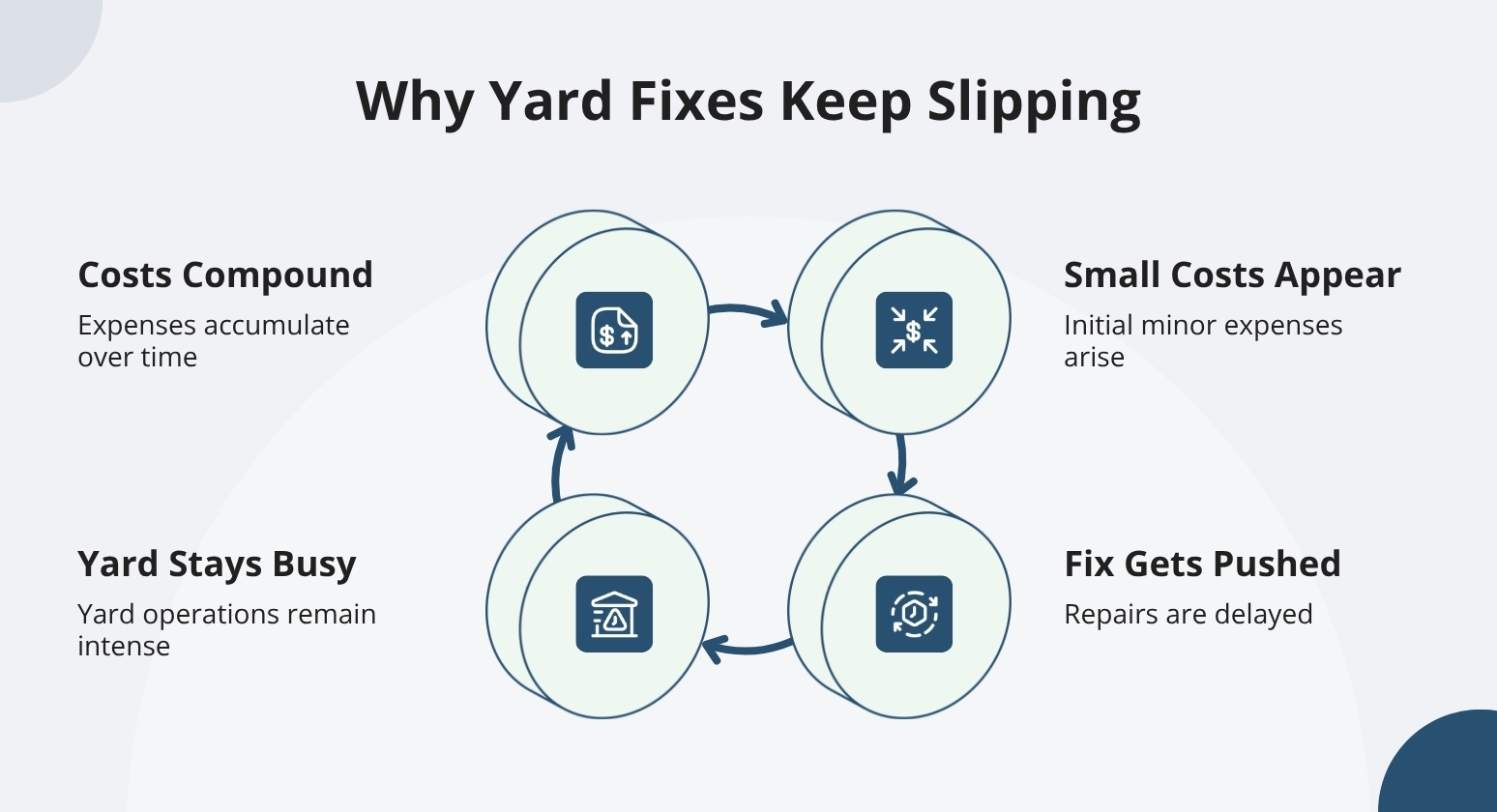
"We are too busy to roll something out right now." A busy yard is exactly the one bleeding the most on detention and overtime. A phased rollout mirrors your current process first, so the yard keeps running during the change rather than stopping.
"The budget is not there this year." The cost of a yard management system is often recouped within the first few months through fewer detention fees and less overtime, so the real question is whether you can afford to keep paying the current bill.
"Our WMS already has a yard module." A bundled module usually tracks trailers at the gate and dock and goes quiet in between, which is where dwell hides. Those free modules quietly cost more than they save at a busy site.
"Our staff are not tech people." A yard management system built for the yard is meant for gate guards and spotters, not analysts, with color-coded screens and tasks that take one or two clicks.
How to Fix Your Yard Management Issues Without Stopping the Yard
Waiting feels safer than acting because of fear of disruption. A phased approach removes most of it, and the payoff lands differently for the two people who feel the yard most.
For the Operations Leader: Calm the Yard From Day One
Start with the two workflows that make the most noise: driver tasking and gate check-in. Move next moves onto an in-cab screen and check drivers in digitally; the loudest sources of yard chaos settle first before you touch anything else.
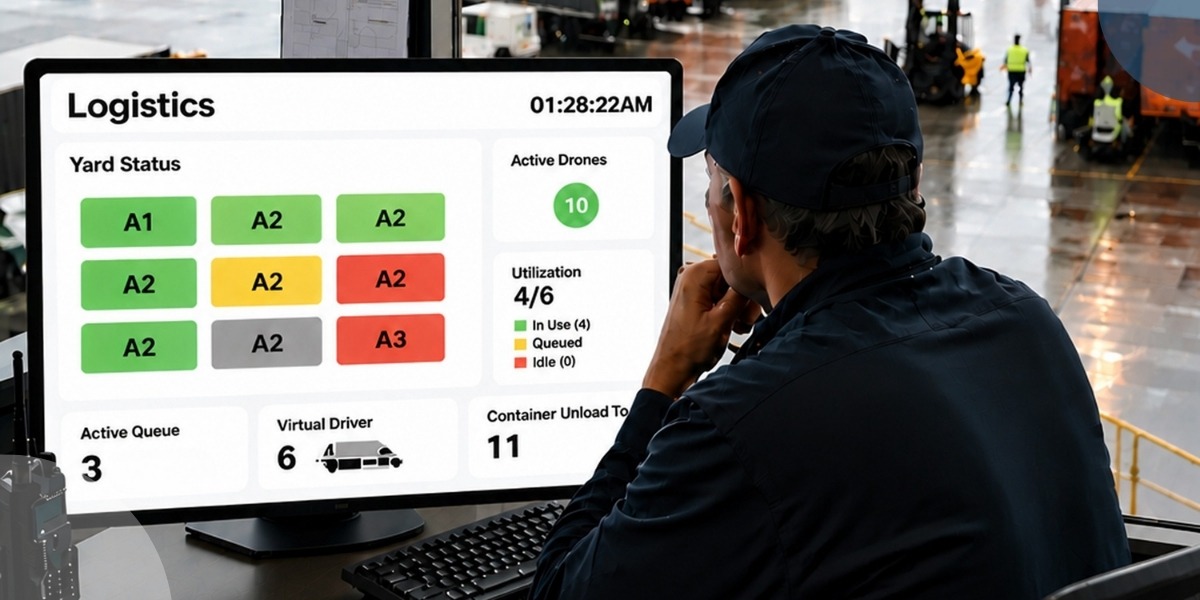
As you run the yard day to day, the win shows up fast. Drivers get their next move on an in-cab screen instead of the radio, so they stop hunting for trailers. The gate produces a clean, timestamped check-in without a clipboard.
Because the system mirrors how your yard already works, gate guards and spotters pick it up in about an hour rather than a training program. Daily firefighting eases because you can see the whole yard on one screen and act before a problem costs money.
For the VP of Operations: Put Yard ROI on the P&L
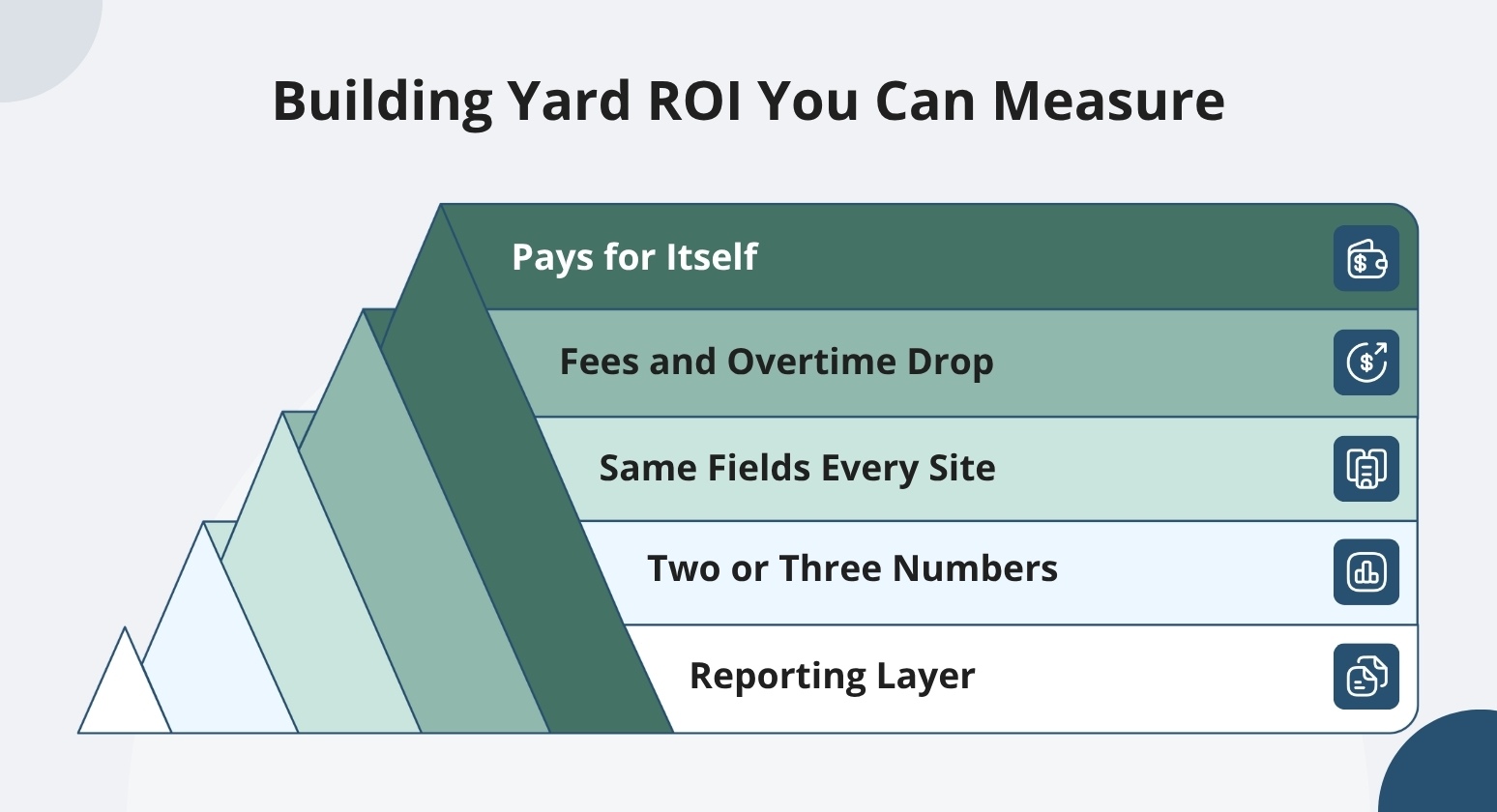
If you own the number, the case is about margin. Make the yard a measurable line item, not a black box. Stand up the reporting layer first: pick the two or three numbers you will govern by, such as detention exposure, dwell, and labor hours, and hold every site to the same fields so the rollup is real.
Detention and demurrage fees drop as dwell becomes visible before it trips. Overtime and yard-dog rentals decline as moves are directed rather than chased.
The system commonly pays for itself within the first few months; network views let you benchmark sites on the same metrics, and because no proprietary hardware is required, you don't need to approve a capital project across dozens of yards.
Start With a Phased Rollout
After calming all necessary tension in the yard and putting an ROI on the process, roll out the yard fixes in phases.
Phase one mirrors your existing gate, yard, and dock steps into the platform as they run today, so nobody relearns their job on day one and the yard keeps moving throughout.
Phase two connects your WMS, TMS, or ERP so data flows in once.
Phase three adds cost-effective inputs like barcode or GPS only where they earn their keep. Most sites run live in six weeks or less, so the fix is in place long before another year of manual workarounds would have cost you.
Keep Your Yard Moving While You Fix It With YardView
The yard will not get quieter while you wait, and the costs of running it by hand do not pause for a better quarter. YardView is built to go in without stopping the operation you are trying to fix:
- Phased Rollout: Phase one mirrors your current gate, yard, and dock steps, so the yard keeps running while the system goes live.
- Real-Time Yard Visibility: A drag-and-drop map shows where every trailer sits and how long it has been there, so drivers stop hunting.
- In-Cab Driver Tasking: Next-best-move requests and an Accept, Start, Finish flow replace the radio and the guesswork.
- Detention and Demurrage Tracking: Dwell alerts flag a trailer before its free-time clock trips, so fees become preventable.
- Works on Your Existing Hardware: PCs, tablets, phones, and in-cab devices you already own, with no proprietary hardware to buy.
Explore how YardView goes in without the downtime a running yard cannot absorb, and find out how quickly a clearer, calmer yard is within reach.
FAQs:
How Do I Know If My Yard Needs a Yard Management System?
Look for the pattern, not a single symptom. If your team runs on spreadsheets and radios, drivers hunt for trailers, detention charges keep piling up without a clear way to dispute them, and you rely on overtime to keep up, then the yard has outgrown manual tracking. Any one of those is manageable. Together, they are the signal that a system will pay for itself.
Is It Worth Investing in a YMS During a Busy Season?
Often, yes. A busy season is when detention, overtime, and gate congestion cost the most, so it is also when a system delivers the most. Because a phased rollout mirrors your current process first, the yard keeps running during the change, and you start capturing the value while volume is high rather than waiting for a slow stretch that may not come.
How Long Does It Take to Get a YMS Running?
Most YardView implementations take six weeks or less per site, with about an hour of end-user training and no proprietary hardware to install. The phased approach means the yard keeps operating throughout, and leadership sees results from the first site before the full network is connected.