Last Updated: January 9, 2026
Modern yard operations move fast. Spreadsheets, radio calls, and delayed updates cannot keep up. To keep freight moving and costs down, teams need real-time visibility into what is happening at the gate, in the yard, and at the dock.
Our approach to yard operations execution brings together live visibility, tasking, and communication in one system. This helps teams make better decisions and act quickly. For busy yards, real-time operations turn the yard from a bottleneck into a reliable source of savings. Real-time operations stop the 'hidden' costs of delays and ensure the yard contributes to your company’s overall profitability.
The Cost of Inefficient Yard Operations
Real-time operations depend on more than just data. They require the kind of clear visibility, accurate information, and tested operational rules that only decades of logistics experience can provide. When any of those elements are missing, yard performance suffers.
Without real-time visibility and timely information, small gaps turn into larger operational issues:
- Yard drivers spend time searching for trailers instead of moving them
- Teams rely on manual yard checks, spreadsheets, or radio calls
- Gate congestion increases as arrival and departure data falls out of sync
- Decisions are made with partial or outdated information
- Safety risks increase when teams lack awareness of current yard conditions
- When yards function without real-time data, teams are forced to react rather than plan. The result is higher labor costs and slower turns. Using a YMS is the best way to optimize your existing labor pool and reduce the challenges of truck driver shortages by getting drivers in and out faster
How Can I Improve My Yard Performance?
Strong yard performance depends on three simple capabilities, proven by logistics experts:
Real-Time Data:
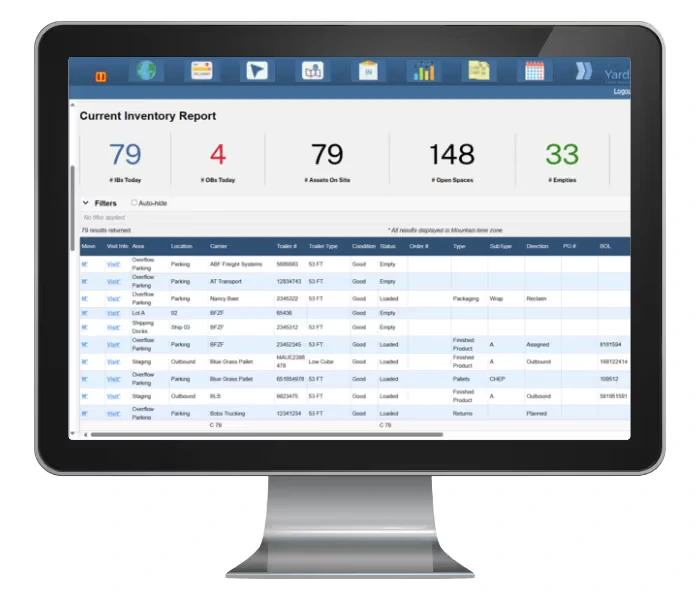
Gain 100% live visibility into where assets are and what is happening.
Real-Time Decisions:
Clear decisions based on current conditions, not old updates. This capability is powered by 25+ years of operational rules and logic.
Real-Time Yard Operations Execution:
Drive fast action through clear, prioritized tasking and live driver communication.
Together, these capabilities support real-time yard operations and improve visibility across the supply chain. When the yard runs efficiently, it becomes a reliable part of the supply chain.
Yard Operations: The Three Pillars of Real-Time Control
The heartbeat of site efficiency lies in how well you connect your assets, your drivers, and your gate. Our YMS orchestrates these essential functions in real-time to ensure every move is tracked, every task is prioritized, and every arrival is seamless
1. Real-Time Asset Visibility
The foundation of efficient yard operations. Effective yard management starts with
knowing exactly where your assets are. A YMS provides total visibility from the gate to the dock, allowing your team to:
- Locate the precise position of trailers, containers, and chassis.
- Monitor critical asset status, dwell times, and high-priority shipments.
- Eliminate manual yard walks and inventory errors.
- Identify potential bottlenecks and blind spots before they cause delays.
By
removing blind spots, you enable faster movement and data-driven planning.
2. Task Management & Driver Comms
Turn visibility into actionable productivity. Visibility is only valuable if your team can act on it. Our system provides yard drivers with prioritized, real-time instructions that adapt to changing conditions.
- Yard Drivers: Receive "next-best-move" tasks via in-cab tablets.
- OTR Drivers: Get automated SMS updates with no app required.
- Compliance: Safety checks are integrated into digital workflows.
- Accountability: Track moves and driver performance metrics.
Empower your fleet with a
mobile-first approach that maximizes moves and improves driver satisfaction.
3. Gate and Access Control
Streamline the entry point of your operation. The gate is the heartbeat of the yard. Gate Access Control ensures your operations begin with accurate, real-time data to synchronize the dock and the yard.
- Reduce gate congestion and OTR driver wait times.
- Optimize traffic flow during high-volume peak periods.
- Enhance labor planning through precise arrival, movement, and departure data.
- Automate record-keeping for audit-ready compliance.
Accurate gate data prevents downstream delays and sets the stage for a high-velocity facility.
Real-Time Yard Operations in Action: Example Use Cases
Distribution Centers (DCs): In fast-moving DCs, real-time operations reduce trailer hunting, keep yard drivers productive, and improve dock turn times. Live visibility and tasking help teams handle demand spikes with less disruption.
Manufacturing and Production: Manufacturing yards rely on real-time operations to ensure materials are staged and ready. Accurate visibility helps prevent production delays caused by missing or misplaced assets. See our blog on
yard asset condition monitoring.
Disruptions and Severe Weather: During weather events or unexpected disruptions, real-time visibility and communication become critical. They help teams identify impacted assets, reprioritize work, and keep operations safe and moving. See our blog and learn
how to weather the storm with a YMS.
Empowering your workforce through yard operations
Real-time yard operations also improve communication and daily work for yard teams.
By reducing guesswork and manual tasks, a YMS helps:
- Lower driver frustration and stress
- Improve safety with better awareness
- Create more predictable workloads
- Support employee retention
Clear communication allows teams to focus on their jobs, not on finding information. By reducing guesswork and stress, real-time tools lower your labor expenses. When your team moves with confidence, you protect your margins and see a direct impact on your bottom line.
Business Impact and ROI
Organizations using real-time yard operations see clear results:
- Faster trailer turns and shorter dwell times
- Reduced detention and demurrage costs
- Better use of labor and equipment
- Stronger coordination between yard, warehouse, and transportation teams
By improving the flow of freight, you turn the yard into an efficient operation that stops cost leaks and keeps your budget under control.
Yard Operations Built for High-Volume Facilities
For complex yard operations, real-time visibility, tasking, and communication are no longer optional. They are essential for keeping freight moving, people safe, and costs under control.
A YardView provides the real-time foundation needed to turn the yard into a reliable, high-performing part of the supply chain.
Ready to see real-time yard operations in action?
Book a personalized demoReal-Time Yard Operations and Supply Chain Visibility: Common Questions
Q. How does a YMS fit into the broader supply chain?
A. A yard management system, or YMS, is a critical part of the YMS supply chain. The software acts as the bridge between supply chain systems for transportation and warehousing. A YMS manages real-time activity where visibility often drops off, at the gate, in the yard and at the dock. This helps teams coordinate better between groups and across systems.
Q. How does a YMS improve day-to-day yard operations?
A. A YMS improves yard operations by showing real-time asset location, status, and movement at the gate, in the yard, and at the dock. This reduces manual checks and helps teams assign work faster, leading to smoother and more predictable yard performance.
Q. Why is yard operations visibility critical for the supply chain?
A. Effective yard management connects high-level planning with real-world yard operations execution. When the yard lacks visibility, supply chain decisions rely on assumptions. A YMS reports on live data from the yard, so decisions are based on what is actually happening.
Q. How does a YMS support end-to-end visibility across the supply chain?
A. YardView's YMS supports end-to-end supply chain visibility by closing the gap between transportation and warehousing. Real-time insight into arrivals, yard moves, and dock activity keeps yard operations and supply chain data accurate and usable.
Q. What makes a YardView YMS different from other supply chain visibility tools?
A. Unlike platforms designed for other functions, YardView focuses on the yard. The platform captures all live operational data at the gate, in the yard, and at the dock - for every visit. This makes supply chain visibility more accurate and actionable.