Last Updated: January 12, 2026
YardView brings together your data, systems, and workflows so decisions are faster and easier to trust. By combining
Automation and Integration with
Reports and Analytics, we turn fragmented yard activity into a transparent, high-throughput operation. This integrated approach allows you to
optimize yard flow, increase asset velocity, and gain total control over
detention and demurrage costs.
The "Smart" Foundation: Yard Intelligence
Intelligence in yard operations is only as reliable as the data behind it. We eliminate dark data (the information lost in manual gate logs and disconnected spreadsheets) by ensuring your yard operations are fully synchronized with your entire tech stack.
The "smart" foundation brings together two core capabilities that work best together:
- Automation and Integration: Keeping data flowing across your tech stack.
- Reports and Analytics: Turning raw data into actionable answers.
Automationand Integration: Solving Operational Hurdles
Automation reduces manual effort while capturing high-quality data.
- Gate Congestion: Eliminated through automatic check-ins using QR codes or cameras.
- Communication Gaps: Solved with directed parking and in-cab instructions for drivers.
- Operational Delays: Reduced via proactive alerts for late arrivals or priority loads.
This keeps visits quick, consistent, and hands-free.
Reports & Analytics: Turning Yard Data into Actionable Answers
If automation and integration create the data, Reports and Analytics turn that data into a competitive advantage.
Reporting and Dashboards for Real-Time Yard Operations
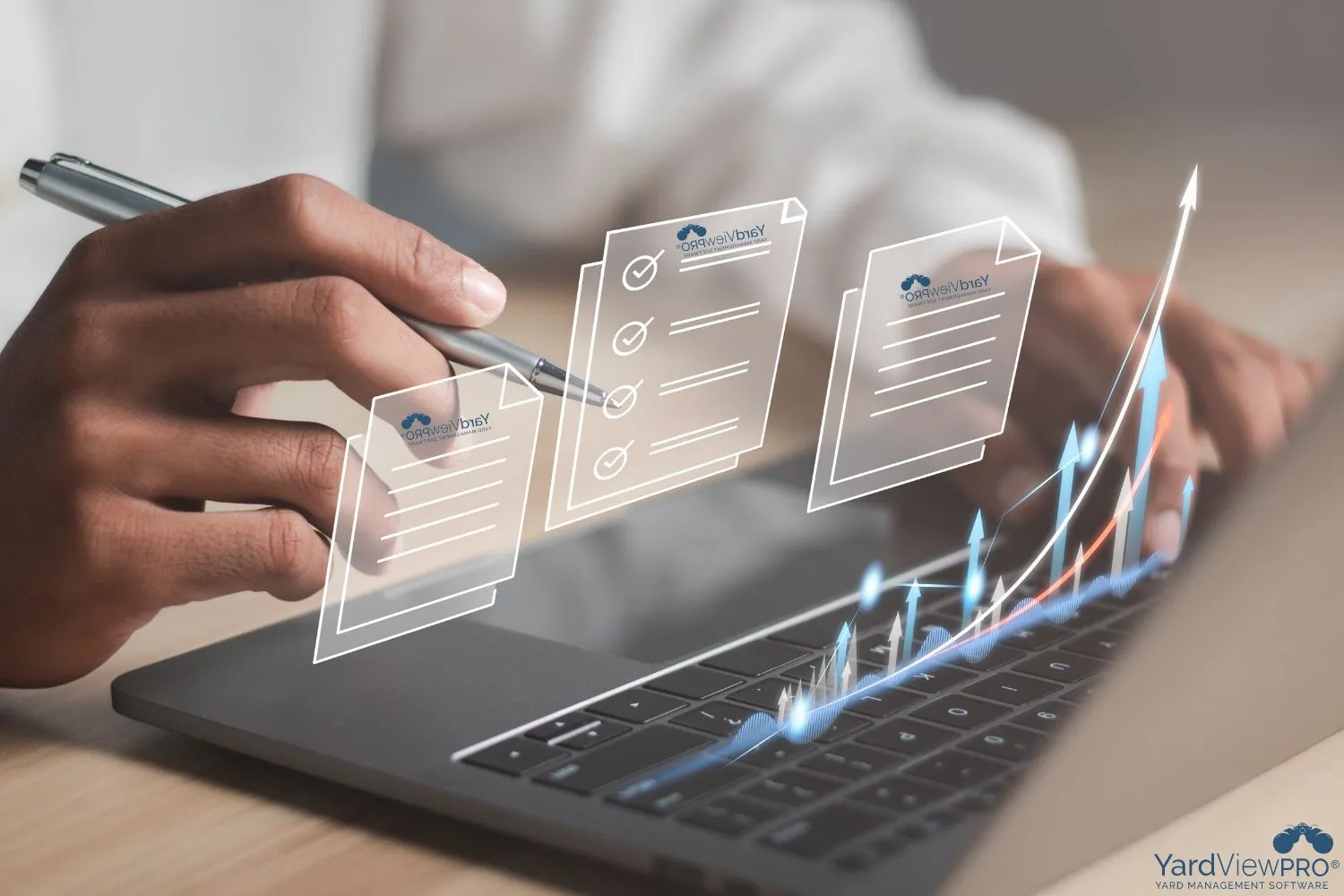
YardView reporting tools organize complex activity into clear views. You can schedule reports to hit your inbox daily to save time. Live dashboards also let teams track dwell times and door status on any device. This helps you spot risks like a potential detention charge before they become a cost.
Analytics for Continuous Improvement
Analytics help you move from reactive "firefighting" to proactive planning:
- Digital Yard Maps: Visual representations of current yard density and asset location.
- Predictive Guidance: Using current activity to suggest the "next best move" for drivers.
- Carrier Relations: Providing the data transparency that shows how a YMS is key to becoming a shipper of choice.
To maximize your ROI, learn how to get the most out of your YMS reports to drive continuous improvement.
For a deeper dive: Learn how Reports & Analytics deliver operational clarity →
The "Optimized" Yard Result: Operational Flow
When you can measure what happens in the yard, you can control costs across your entire business. YardView manages the "flow" of your yard so you can process more trailers without needing more dock doors or extra space.
Supply Chain Cost Control Starts at the Yard
The yard is where transportation, the warehouse, and labor all meet. If you don't have clear data on your yard, your cost control will be slow and incomplete. YardView connects yard activity to upstream and downstream systems, giving teams:
- Real-time insight into operational cost drivers.
- Data-backed accountability for delays and fees.
- Accurate reporting to support forecasting and planning.
Whenyou can measure what happens in the yard, you can control costs across yourentire business instead of waiting for the bill to arrive.
Why You Need a YMS to Control Costs
Without a YMS, most companies rely on clipboards, spreadsheets, or guesses. This "old" data makes it impossible to stop fees before they happen. A YMS helps you save money by:
- Ending the Guesswork: You get exact timestamps instead of "estimates."
- Smoother Workflows: Every driver follows the fastest, cheapest path.
- Automatic Alerts: Your team is told before a trailer sits too long and starts costing you money.
To help you cut shipping costs, we focus on the areas where most yards waste the most money:
1. Detention and Demurrage (D&D) Control
High fees that are hard to prevent or dispute create big budget problems. To see how these costs impact your bottom line, see our
2025 Update on Average Detention & Demurrage Fees. To get real detention and demurrage cost reduction, you need to see events as they happen. YardView helps you control detention and demurrage costs by tracking how long trailers sit and comparing it to your "free time" limits.
- Dock Scheduling Optimization: Align appointments with labor and equipment to prevent bottlenecks.
- Real-Time Yard Visibility: Track the exact location and status of every trailer, container, and chassis.
- Digital Event Tracking: Automatically capture timestamps for gate-in, dock arrival, and gate-out.
- Audit Trail Generation: Maintain accurate records to validate or dispute invoice issues.
2. Labor Optimization
Yard drivers waiting for orders and too much overtime pay drive up operational spend. Labor is often the second-largest variable in reducing shipping costs. A YMS stops the "search and find" game that forces drivers to work extra hours.
- Automated Tasking: Assign moves instantly based on priority, proximity, and availability.
- Optimized Yard Moves/Routes: Reduce empty drives and short-cuts that waste fuel and time.
- Digital Proof: Confirm task completion with time-stamped digital records for productivity tracking.
Maximizing Throughput and Capacity ROI
The ultimate goal of yard intelligence is to keep your assets moving. You lose money when freight stalls at the dock. Optimization is about more than spending less; it is about doing more with the equipment and space you already have. YardView manages the flow of your yard so you can process more trailers without needing more dock doors.
Streamlining the Flow
One of the best ways to improve this is by looking at how long it takes to inbound a trailer. By smoothing out that process, you can handle more volume without hiring more people.
- Throughput Reports: See how many trailers you move each day and find ways to do more.
- Gate-to-Gate Time: Track exactly how long it takes a trailer to enter, unload, and leave.
- Spot Management: Organize your dock spots in real-time to keep traffic moving steadily.
This operational flow is the ultimate goal of a connected yard.
Intelligence Rooted in 25 Years of Logistics Expertise
In a market of unproven technological visions, YardView offers a different approach. Our intelligence is driven by over 25 years of operational rules and deep logistics expertise. We provide a battle-tested platform that understands the real-world logic of how yards move, ensuring you get a system that works on Day One.
Ready to see your yard in high definition?
Book a personalized demo today!FAQs: Yard Intelligence
Q. How does an integrated YMS help reduce detention and demurrage fees?
A. The software acts as an early warning system. It tracks how long a trailer has been sitting and alerts your team before D&D fees start. Instead of finding out about a delay through an invoice, your team gets a real-time alert to move that specific asset.
Q. Can YardView handle multiple sites with different workflows?
A. Yes. You can set one standard for your whole network while letting each site handle its own daily yard activities. This gives you a full view of your operations from one screen.
Q. Do we need to buy expensive hardware like sensors to use automation?
A. No. While we can connect to smart sensors, most of our savings come from the software itself. In some cases, we can connect to existing technology like GPS already in your yard trucks. You can use digital check-ins and move rules to automate your yard without the high cost of new hardware.
Q. Why does the yard matter for my overall throughput strategy?
A. The yard is the "missing link" between your trucks and your warehouse. When you have accurate gate and dock data, you can stop paying for mistakes, plan your labor better, and move freight faster.
Q. Is the software difficult for yard jockeys and gate guards to learn?
A. We built our software for the people working at the gate, in the yard, and on the dock. The screens are simple and guide drivers through their tasks step by step. We also offer role-based reports and automated delivery, so team members get data in real time. This makes training fast and helps your team get back to work quickly.