
Key Takeaways:
- Yard management controls the critical activity between arrival and departure: trailer movement, gate flow, dock coordination, asset tracking, and yard task execution.
- When those processes stay manual, hidden costs build quickly through detention fees, demurrage, overtime labor, excess leased trailers, misplaced assets, and compliance exposure.
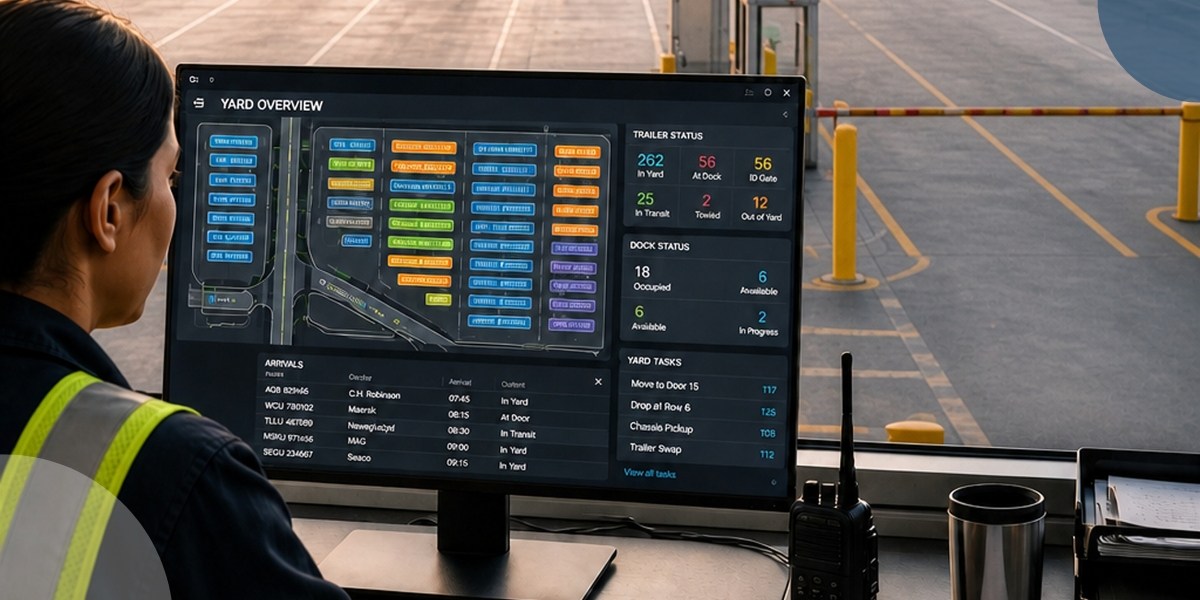
- Real-time yard management gives your team accurate trailer locations, dwell data, dock status, and move priorities without relying on lot walks, radio calls, or stale spreadsheets.
- A strong yard management system connects gate, yard, and dock operations into one controlled workflow, giving you visibility and accountability from gate-in to gate-out.
Anyone who has managed a busy facility knows the 2 PM crunch. The radio is crackling. Twenty-three trailers seem to have vanished despite a lot walk just an hour ago. A spotter is hitting overtime searching for a ghost container in B-7.
Somewhere in that maze, a trailer is racking up detention fees because the paper trail stopped at check-in.
After 28 years in the yard, we know how to solve this headache. Real-time yard management fixes this problem. It shows your team where every asset sits, so you always know which trailers need to move first.
What Is Yard Management?
Yard management is the operational discipline that governs trailer movement, gate flow, dock coordination, and asset tracking between arrival and departure. The yard sits between your TMS and WMS. Manual yard processes are typically the weak links in that chain.
When yard teams rely on manual steps, trailer visibility disappears. Without knowing if a dock is clear, it's hard to tell drivers what to move next without a radio call and a manual check.
Purpose-built yard management systems first emerged in the late 1990s to close this gap, and YardView was there from the start. Today, many facilities still run on spreadsheets and clipboards.
Why the Yard Is a P&L Lever, Not a Cost Center
The yard generates a measurable lift in your margins when you eliminate the hidden costs. Leading facilities report up to 95% reduction in detention and demurrage fees, up to 25% cuts in leased trailer pools, and system costs recouped within six months.
These are direct contributions to your P&L. Trailers sitting idle cost you money. Move them faster, lease fewer, and turn the yard from a cost center into an engine for throughput.
What Poor Yard Management Is Costing Your Operation
Poor yard management creates a financial blind spot where costs accumulate invisibly until the bills arrive.
- Detention and Demurrage Fees Quietly Eroding Margins — Detention and demurrage charges compound while trailers sit unmonitored, but real-time dwell tracking and proactive alerts let you act before fees trigger.
- Leased Trailer Bloat and Underutilized Assets — Without digital tracking, facilities may over-lease to buffer against uncertainty, paying for capacity they already have but can't locate.
- Overtime, Temp Labor, and Yard Dog Rentals Filling the Gaps — Manual yard coordination creates inefficiency spikes absorbed through overtime and rentals that disappear once search-and-find waste is eliminated.
- Manual Admin Work Nobody Can Quantify Until the Invoices Arrive — Automating data entry, status updates, and reporting saves leading facilities up to 40 hours per week.
- The Compliance Exposure Most Operations Don't See Coming — Paper logs fail exactly when you need them most; automated timestamping and digital records create defensible evidence when auditors arrive.
The Operational Challenges Breaking Today's Yards
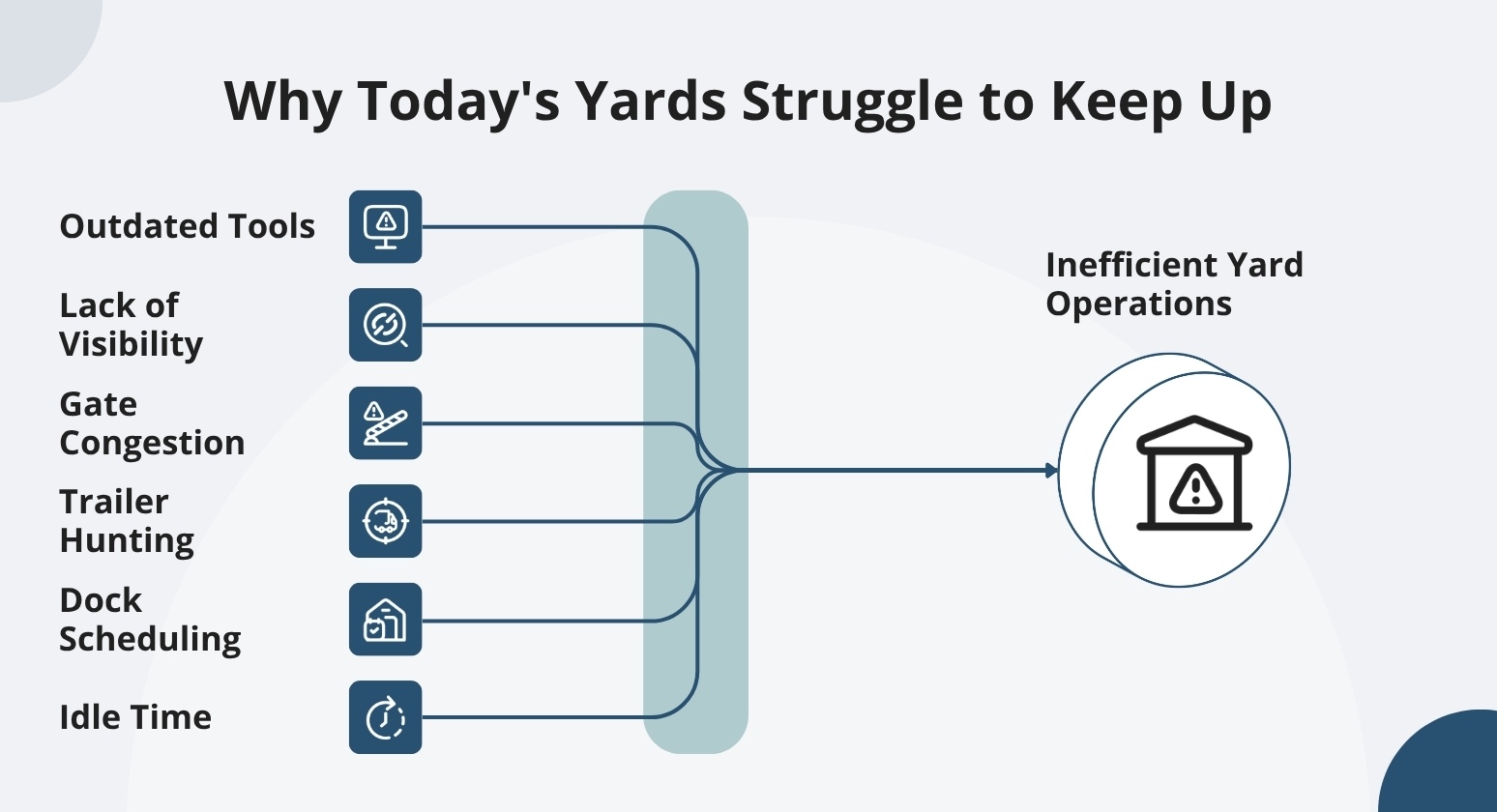
Every yard runs on some combination of clipboards, whiteboards, spreadsheets, and radio calls. As a result, teams spend half their shift hunting for trailers that should be easy to find.
Meanwhile, detention fees pile up on forgotten trailers.
The breakdown is systematic. Manual processes can't keep pace with the decisions a busy yard demands. By the time your morning lot walk is complete, three new arrivals have already changed the picture.
Spreadsheets hold yesterday's data. Today's problems multiply.
Then, the cost shows up everywhere except where it can be easily measured:
- Overtime payroll because moves take twice as long as they should.
- Leased trailer capacity you're already paying for but can't locate.
- Gate congestion that turns a five-minute check-in into a twenty-minute ordeal.
- Safety incidents because processes depend on memory instead of enforcement.
Your operation isn't broken — it's running on tools that weren't built for the job.
The Ideal Yard Management Process Flow From Gate-In to Gate-Out
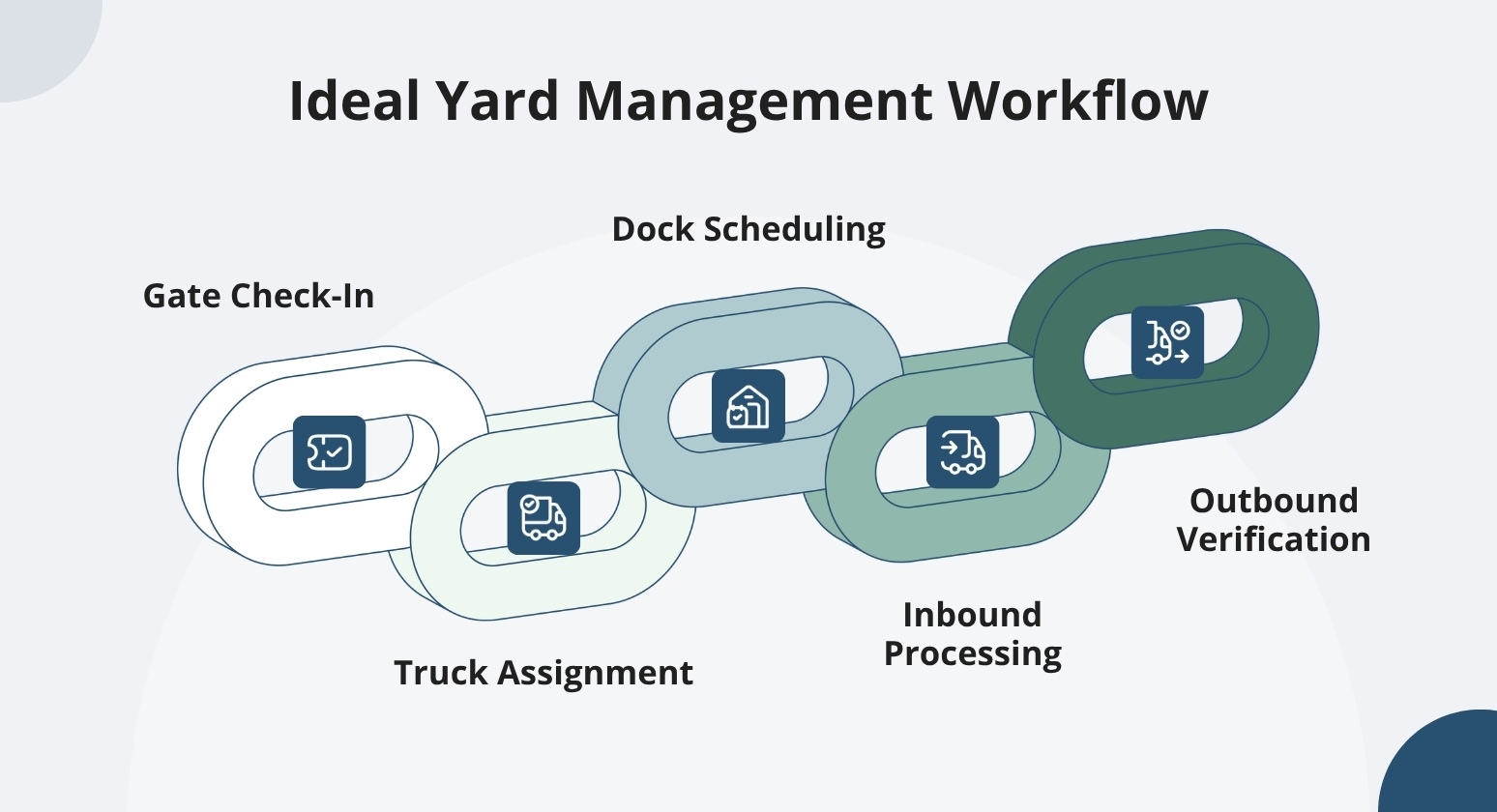
A digital yard management system has five phases.
Your team gains control over the trailer lifecycle instead of reacting to problems after they've already cost money. The flow eliminates radio calls, paper trails, and the constant search for missing assets that burns hours every shift.
1. Gate Check-In and Arrival
The gate captures driver identity and load documentation without a cab exit. Your team assigns each arriving trailer to an exact yard location based on load type and destination.
SMS notifications guide drivers to their assigned spot with turn-by-turn directions. The system eliminates manual paperwork at check-in and removes guesswork from parking assignments, so drivers know exactly where to go.
2. Truck Assignment and Yard Slotting
The system assigns arriving trailers to exact yard spots based on load type, dock destination, and slot availability. That assignment automatically creates the first move request in the driver's task queue.
Your yard operator skips the manual slot hunting and radio coordination. The driver gets precise directions to the assigned location without waiting for instructions.
3. Dock Scheduling and Door Assignment
Dock appointments sync directly to yard slot assignments. They match inbound timing with door availability before congestion builds.
The scheduling data shows available capacity by door type and time window. This eliminates last-minute door shuffling when a trailer arrives without a confirmed appointment.
4. Inbound Processing and Warehouse Handoff
The yard hands off to the warehouse with shared visibility across dock status, dwell times, and load details. Your warehouse team sees which doors are occupied and how long trailers have been sitting.
Yard operations tracks which loads are ready for unloading. The system syncs with WMS, so both teams work from the same data. When dwell time hits a threshold, either team can reassign doors or prioritize moves without phone calls.
5. Outbound Verification and Departure
The outbound check-out process closes the trailer's visit with seal verification, departure confirmation, and final dwell recording. Gate-out timestamping creates the complete visit record.
It needs physical seal confirmation before departure.
These departure timestamps defend you against carrier disputes. They protect you from detention charge arguments.
From Lot Walks and Radio Calls to YardView’s Real-Time Yard Control
This is the difference between reactive and proactive yard management.
- Live yard visibility: YardView's drag-and-drop console displays up to 20 data points per asset across all docks, spots, lanes, and zones in a single live view — eliminating stale lot walk data
- In-cab driver tasking: YardView's in-cab move request system delivers prioritized, next-best-move assignments via a simple Accept → Start → Finish workflow, ending radio-driven guesswork
- Faster yard audits: YardView's lot check tools allow drivers to verify and correct asset positions from the in-cab device, delivering up to 75% faster yard audits
- Detention prevention: YardView's Detention and Demurrage module tracks dwell in real time and fires proactive alerts before fees accumulate — customers report up to 95% reduction in D&D fees
- Touchless gate processing: YardView supports unmanned gate configurations using AI cameras with OCR, QR code scan, and GPS geofencing — reducing gate congestion without adding headcount
With YardView's YMS, your yard becomes controlled and measured. Every move has a purpose. Every decision has data behind it.
FAQs
What Does a Yard Manager Do?
Your yard manager oversees daily throughput, coordinates yard drivers and spotters, manages gate flow, monitors dwell times, and ensures safety compliance across the facility.
They read the lot each morning, triage bottlenecks in real time, and carry accountability for keeping freight moving. When detention fees hit or a trailer goes missing, the yard manager answers for it.
They coordinate between OTR drivers, warehouse teams, and dispatch. They manage the physical movement of assets through your operation.
Isn’t the Yard Module in My WMS or TMS Enough?
WMS and TMS yard modules provide basic slot tracking but lack real-time driver tasking, next-best-move logic, post-arrival dwell monitoring, detention management, and in-cab communication.
The real cost of "free" yard tools shows up in detention invoices and manual workarounds, not in the license fee. Your WMS knows where a trailer should be. It doesn't know where it actually is or what should move next.
A dedicated yard management system connects to your existing TMS and WMS via API to fill these operational gaps.

.webp)