Key takeaways:
- Spotter and dispatch hours inflate through radio queues, trailer hunts, and stale location data, none of which shows up as a discrete line item.
- Cutting headcount doesn't address any of it; the same inefficiencies just hit harder with fewer people.
- Trailer location drift is the root cause of most wasted spotter time. When recorded positions don't match reality, spotters search instead of move. Dispatchers are being used as a location lookup service. In manual environments, dispatchers spend the majority of their shift answering "where's that trailer" from spotters, dock supervisors, and OTR drivers.
- Overtime and temp labour are treating symptoms, not the problem. Technology that eliminates friction points and returns hours to the existing crew rather than buying more of the same problem.
When spotters are burning through shift hours hunting trailers across a lot where recorded locations don’t match the last yard walk, the hours don't show up on any single line item.
They disappear inside the shift.
Dispatchers relay the same move instructions twice. OTR drivers stack at the gate with questions that stall every departure behind them. Cutting headcount doesn't fix any of that.
This article is a practical path to reclaiming those hours with the crew already on the clock.
How Yard Spotter and Dispatch Hours Quietly Inflate Your Labor Costs
Spotters and dispatchers keep trailers moving. When that work runs on radio calls, stale yard walks, and manual spreadsheets, hours can inflate well before the cost shows up anywhere obvious.
The inefficiency hides inside shift time — not line items.
The Reasons Spotter and Dispatch Hours Spiral Out of Control
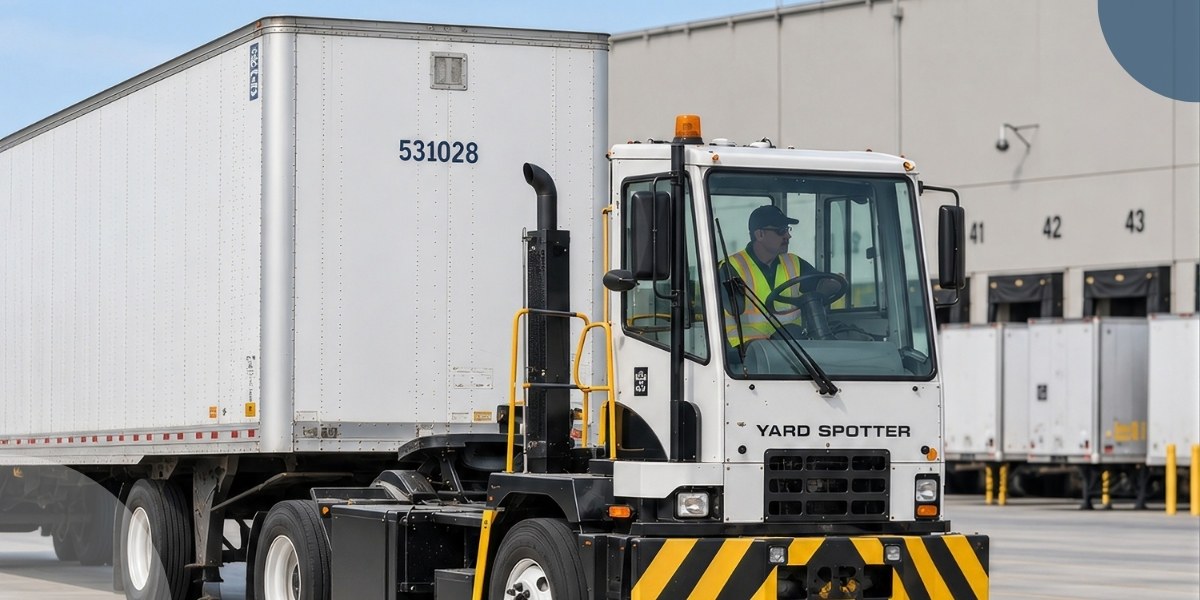
- Spotter idle time accumulates between moves when dispatch runs on radio and spreadsheet — a spotter finishes a move, radios in, and waits while the dispatcher hunts for the next trailer, pulling facilities below the 15–25 moves-per-shift benchmark.
- Trailer location drift costs time per missed update when recorded positions don't match reality, leaving spotters searching rather than moving.
- Dispatcher role inversion happens when manual environments bury dispatchers in location questions from spotters, dock supervisors, and OTR drivers — leaving no clear picture of which trailer moved last or where it currently sits.
- Stale yard walk data from three to four daily walks is accurate only at the moment each walk ends, and drifting positions result in more radio calls, more trailer hunts, and more dispatcher intervention.
- Dock door miscommunication through radio calls and whiteboard updates can leave trailers staged at the wrong door or drivers waiting at an unready dock, adding delay to individual loads.
- Manual gate check-in relying on paper logs or phone calls to dispatch can slow OTR driver processing, creating queues that compress driver hours-of-service windows before a load even moves.
- Priority load delays occur when dispatchers lack current trailer status — loaded, empty, or staged — because confirming a hot load manually adds time before the first move is even assigned.
- Shift handoff errors compound when outgoing yard status lives on a whiteboard or spreadsheet, meaning the incoming dispatcher may start the shift on data that is already wrong.
Why Adding Overtime and Temp Labor Is No Longer Sustainable
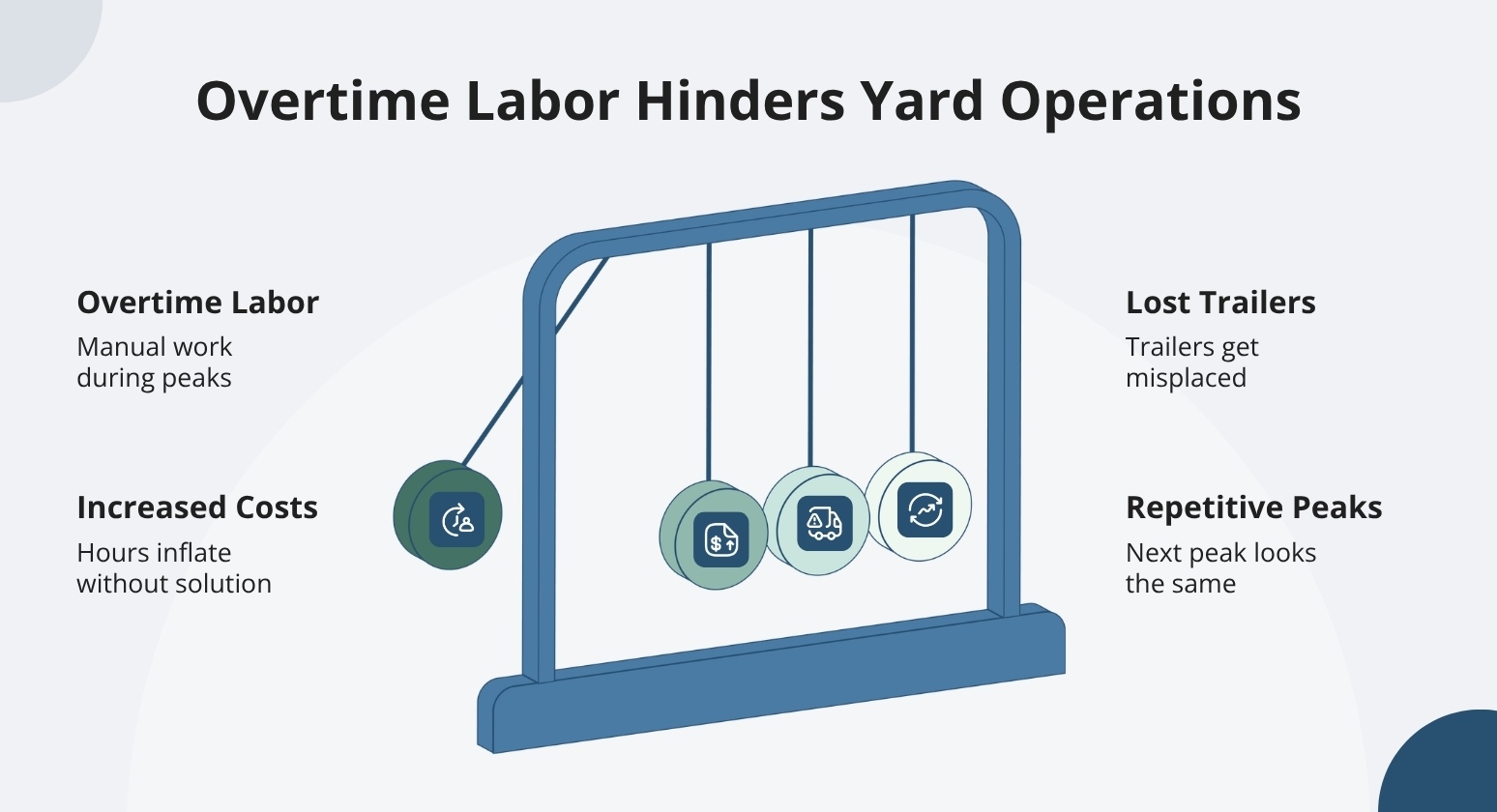
The typical yard operation leans on overtime and temp labor during peaks. Very few turn to technology as a solution. This lack of enthusiasm for technology is unfortunate since modern yard platforms can help you sync spotters and dispatchers easily.
Sticking to manual patterns and overtime labor adds cost without fixing the underlying problem. Hours still inflate, trailers still get lost, and the next peak looks exactly the same.
If your operation is caught in that cycle, technology reduces the manual work that drives those extra hours in the first place.
How YardView Reduces Yard Spotter Hours Without Cutting Headcount
Spotter hours inflate because the work gets interrupted by radio queues, trailer hunts, and moves assigned to the wrong location. Fix those three friction points, and the same crew moves more trailers in the same shift.
Next-Best-Move Tasking to Eliminate Idle Wait Time
When a spotter finishes a move, YardView's next-best-move tool shows the right next job right away. It is based on proximity, urgency, and request age.
The radio call disappears. The wait disappears with it. Customers have reported faster spotting and spot moves.
In-Cab Accept → Start → Finish Workflow That Ends Paperwork
The Accept → Start → Finish workflow on tablet or mobile reduces radio back-and-forth to near zero. Safety and inspection prompts are built into each task — compliance is digitally enforced without adding steps.
Every move generates a timestamped audit trail that paper logs never produced.
Directed Parking and Guided Moves So Drivers Know Exactly Where to Go
When drivers are covering unfamiliar ground, confusion about where to drop costs real time. YardView's directed parking and move rules guide each driver to an open spot. This cuts back-and-forth radio calls before the trailer is set.
Benchmarking Spotter Productivity: 15–25 Moves Per Shift
Spotter productivity benchmarks at 15–25 moves per eight-hour shift. When a driver falls short, idle wait time, equipment issues, or non-move tasks are usually the cause.
YardView Analytics surfaces moves per driver, average move duration, and idle time — so underperformance becomes visible before it compounds.
How YardView Reduces Yard Dispatch Hours Without Cutting Headcount
When dispatchers spend the shift answering "where's that trailer" instead of sequencing moves, hours inflate fast. The fix is giving dispatch the trailer location, dwell time, and load status needed to make the next move decision without picking up the radio.
Real-Time Yard Visibility So Dispatchers Stop Chasing Trailers
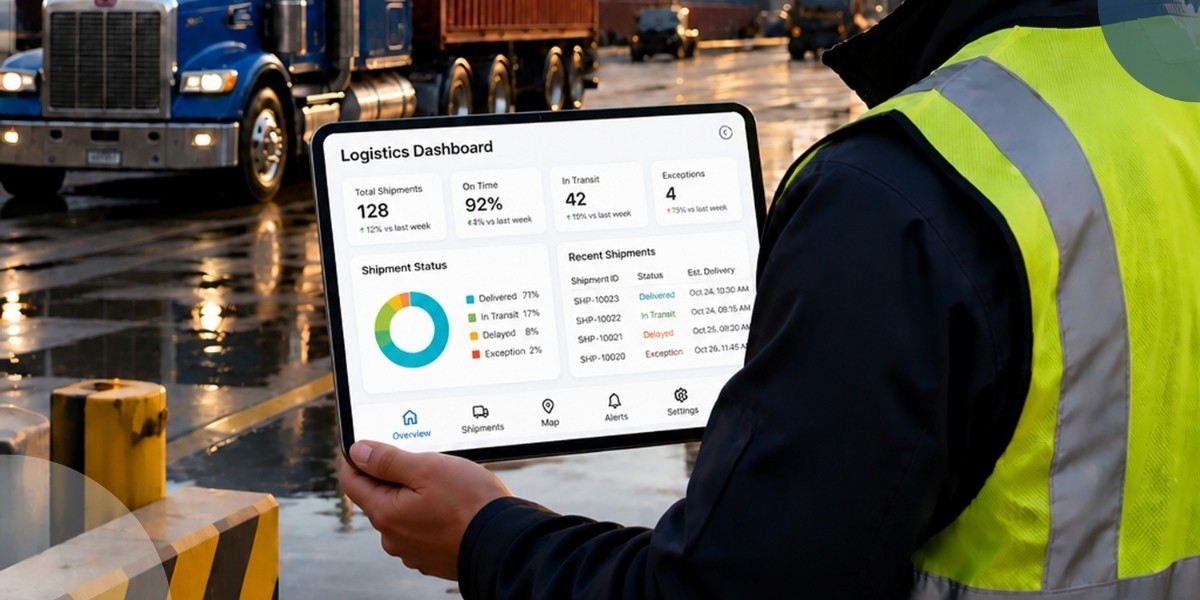
When dispatchers can see every trailer's position across gate, yard, and dock from a single screen, radio calls for location checks stop. One customer documented a 20% reduction in dispatch hours — 175 weekly hours — after making that shift.
Drag-and-Drop Console Showing Every Asset at a Glance
When dwell climbs in a zone, a dispatcher can spot it right away. Load status, carrier, and location are visible across every dock, spot, and lane.
No radio call needed.
Automated Notifications That Replace Manual Status Calls
When status calls stack up, dispatchers lose move-sequencing time to phone tag. YardView's proactive alerts and carrier read-only portals answer the "where's my trailer" question before anyone picks up the phone.
Saving Up to 40 Administrative Hours Per Week
Customers have reported saving up to 40 hours per week on administrative work when YMS auto-populates data across connected WMS, TMS, and ERP systems. When data entry is manual, dispatchers spend shift time recording what already happened.
Automated cross-system population returns those hours to exception management.
Do More With The Same Headcount in Your Yard
Poor visibility and broken communication inflate yard labor hours. YardView closes that gap. It replaces radio calls, paper checks, and spreadsheet guesswork. It gives accurate digital control across every gate, yard, and dock event.
- Touchless, directed gate entry: YardView uses SMS-based driver communication and QR code check-in to keep drivers in their cabs from arrival through departure. No app download required.
- Real-time yard visibility console: The drag-and-drop console displays up to 20 data points per asset across all docks, spots, lanes, and waiting zones simultaneously. Accurate asset visibility across the full yard reduces the blind spots that turn routine moves into reactive firefighting.
- In-cab move tasking with built-in safety prompts: The Accept → Start → Finish workflow has compliance checks built in at every step. Answers are recorded and stored automatically, creating an audit trail that holds up under scrutiny.
- Digital yard audits replacing manual lot walks: YardView's lot check function lets drivers verify and update asset positions from the in-cab device — up to 75% faster than manual yard walks — reducing the need for personnel on foot in active traffic lanes.
- Complete transaction history for every yard event: YardView stores every timestamped gate, yard, and dock transaction as a full record, not snapshot data. Near-misses, safety checks, and compliance records are documented before anyone has to radio them in.
For operations ready to move beyond the clipboard, YardView's approach to yard safety is worth exploring as a next step.