Key takeaways:
- Yard incidents are systemic, not individual failures. When struck-by events occur, the instinct is to blame the worker but the conditions that made the mistake possible were already baked into the operation.
- Visibility is the foundational safety control. Near-misses most often happen in the gap between where workers think a trailer or yard tractor is and where it actually is.
- Paper-based compliance leaves no defensible audit trail. Digital, timestamped enforcement of every check is the only audit-proof approach.
- Keeping drivers in their cabs is itself a safety intervention. Directed gate entry, in-cab tasking, and digital audits reduce unnecessary foot traffic in vehicle zones.
When a spotter crosses a blind zone between two parked trailers, nobody on the radio knows where they are. A yard tractor moves. The near-miss surfaces twenty minutes later — if it surfaces at all.
This gap isn't the spotter's fault. Radio calls can't track real-time worker positions nor can paper checks enforce a safety step before a move starts.
That gap has a cost beyond the incident itself. Yards running on spreadsheets and manual lot walks may carry liability exposure, stale inventory counts, and supervisors reacting to problems they couldn't see coming.
Better position awareness cuts down on spots where vehicles and people meet. Here’s how you can insulate your yard from safety incidents.
Why the Yard Is the Most Dangerous Place in Your Operation
Yards pack more hazard types per square foot than most areas. Moving vehicles, pedestrians, dock workers, and heavy equipment share the same uncontrolled space.
When foot traffic increases or shift transitions overlap, the potential for a struck-by incident rises. That risk is structural.
When an incident happens, the first instinct is to find the worker who made the mistake. That reflex misses the deeper issue.
The conditions that made the mistake possible were already in place. There was no shared view of where vehicles and workers were. There were no enforced checks and no clear picture of active moves.
When those conditions go unaddressed, safety failures become inevitable. Building safety into the workflow itself is the only durable fix.
A Fatal Case Study: Darkness, Rain, and No High-Visibility PPE
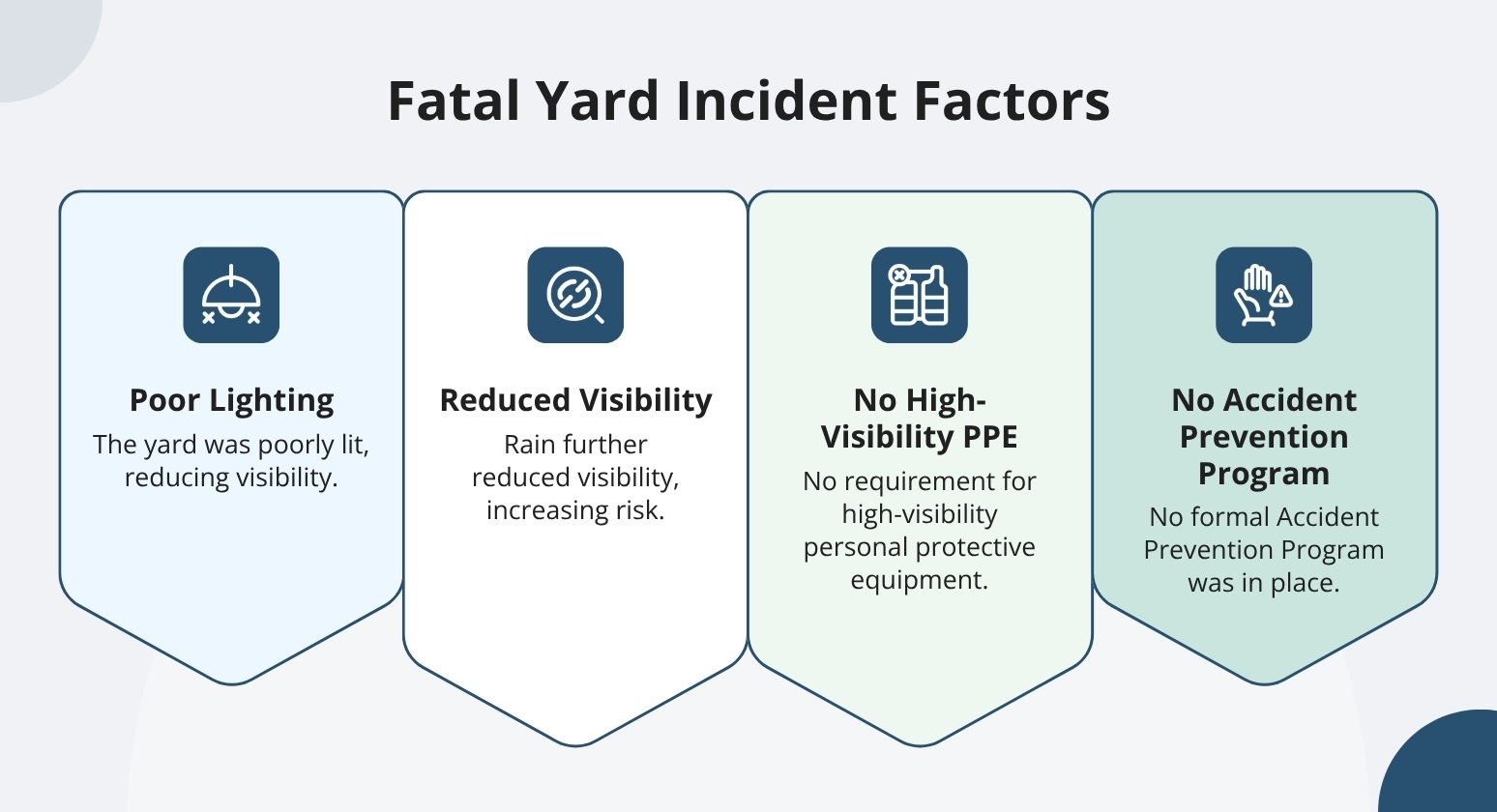
A 56-year-old truck driver was fatally struck by a yard tractor traveling approximately 10 mph. It happened at night. The yard was poorly lit. Rain reduced visibility further.
Worse, investigators found no requirement for high-visibility PPE and no formal Accident Prevention Program was in place. When these factors combine, the risk of a struck-by incident can increase substantially.
The lesson isn't that yards are inevitably dangerous. Gaps can stack up quietly. They can be environmental, procedural, or administrative.
Reducing how often workers move through active vehicle zones minimizes exposure. Put safety rules in written, enforceable programs. Don't rely on informal practice.
How Poor Yard Visibility Causes Incidents Before Anyone Reacts
Visibility is not a convenience feature in yard operations. It is the core safety control and everything else depends on it.
When workers and vehicles share the same space, knowing where each one is before a move starts is what prevents a near-miss from becoming an incident.
Most near-misses happen in the gap between where workers think a trailer or yard tractor is and where it actually is. When workers operate from different mental pictures of the yard, that gap can create serious safety exposure.
5 Signs Your Yard Has a Dangerous Visibility Problem
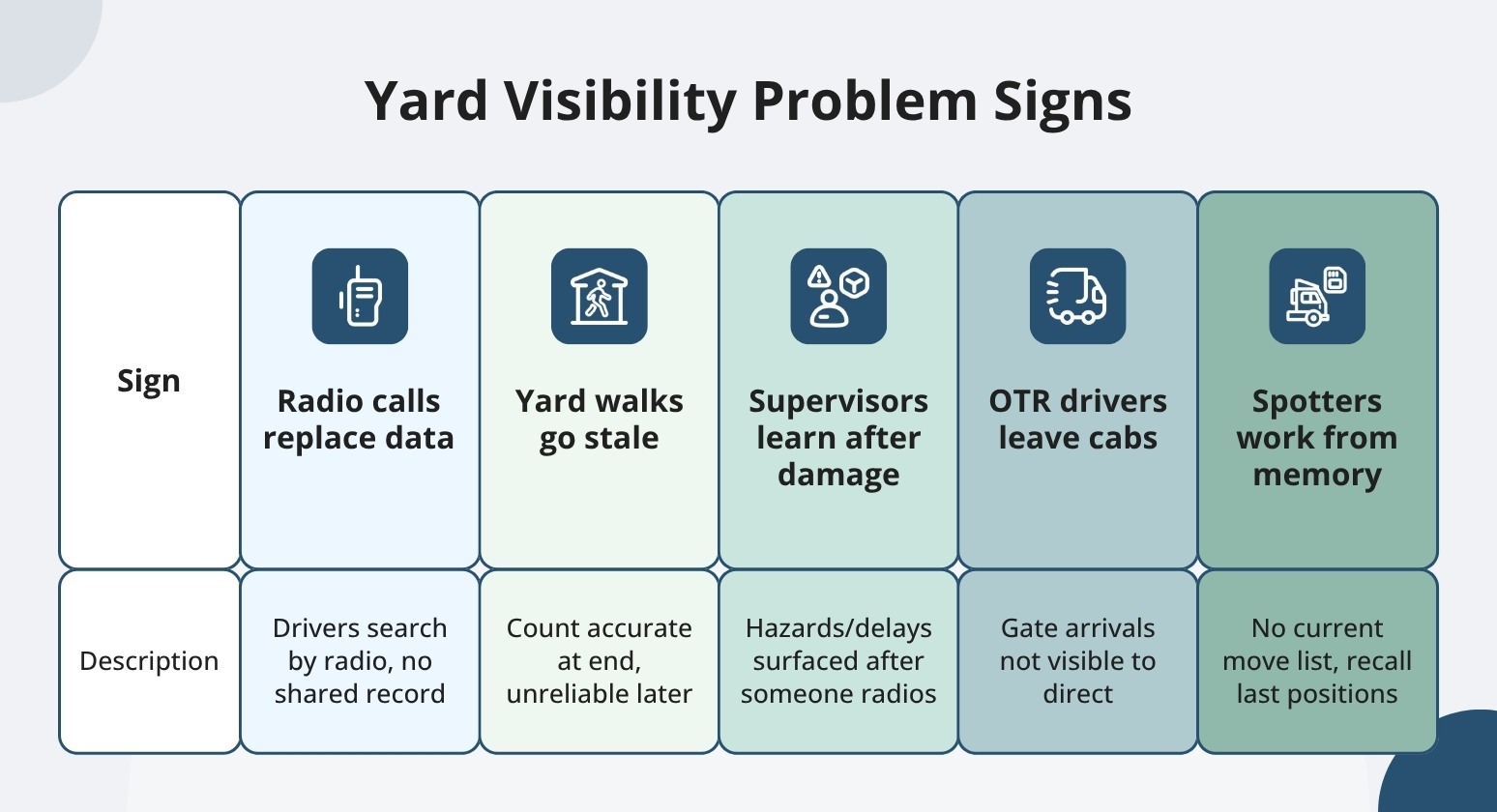
If your yard shows any of these patterns, trailer location data may not be reaching the people who need it in time to act:
- Radio calls replace trailer location data. Drivers hunt for trailers by radio because no shared record shows where assets actually are.
- Yard walks go stale on contact. The count is accurate when the walk ends — and unreliable minutes later.
- Supervisors learn about problems after the damage is done. No system surfaces hazards or delays until someone radios them in.
- OTR drivers leave their cabs to ask for directions. Gate arrivals aren't visible to anyone positioned to direct them before they step out.
- Spotters work from memory, not instruction. No current move list means spotters fill gaps by recalling last-known positions — which can change without notice.
Enforce Safety, Compliance, and Inspection Checks Automatically
Memory-dependent checks can break down under volume spikes and fatigue. Platforms like YardView help you ensure compliance remains firm even under heavy volumes.
YardView builds safety, compliance, and inspection prompts directly into each driver move task. Drivers must actively respond and answers are recorded on their own.
This makes every check audit-defensible.
Replace Radio Chaos With Clear, Prioritized Moves
Unclear or late instructions can push drivers to guess. They may wait in a blind zone. They may move without direction or act on a stale radio call.
YardView's in-cab tasking delivers a single, prioritized move request at all times.
The Accept → Start → Finish workflow, backed by Next-Best-Move logic, replaces radio ambiguity with one clear instruction.
Drivers spend less time moving through active lanes while searching for their next task.
Hold Regular Equipment and Vehicle Inspections That Hold Up in an Audit
When a yard tractor's brakes fail and the inspection record is a clipboard sheet, the facility may have no defense. Paper checks can leave no reliable evidence that inspection actually happened.
With YardView, compliance checks are built directly into each driver task. Inspection steps are digitally enforced. Each one is timestamped. They are stored automatically. This reduces paper use and creates an audit trail.
Use Blind Seal Verification to Prevent Mis-Releases and Cargo Exposure
Seal mismatches and outbound errors can surface when a driver releases a trailer based on a verbal instruction or an unverified number.
Blind Seal Verification addresses this by hiding the seal number within the system. The driver must physically locate and match the seal before the system records a release. That step reduces the risk of releasing the wrong trailer or leaving cargo exposed.
While primarily a cargo theft prevention system, YardView’s blind seal verification prevents wrong trailer processing that increases the risk of a needless trailer move.
When the Yard Stops Being a Guessing Game, Safety Stops Being a Gamble
Poor visibility and broken communication lead to yard safety incidents. YardView replaces radio calls, paper checks, and spreadsheet guesswork with real-time digital control across every gate, yard, and dock event.
- Touchless, directed gate entry: SMS-based instructions and QR code check-in keep drivers in their cabs from arrival through departure. No app download required.
- Real-time yard visibility console: The drag-and-drop console displays up to 20 data points per asset across all docks, spots, lanes, and waiting zones simultaneously — reducing the positioning gaps that can turn routine moves into reactive firefighting.
- In-cab move tasking with built-in safety prompts: The Accept → Start → Finish workflow has compliance checks built in directly. Drivers respond to each prompt. Answers are recorded and stored automatically, creating an audit trail that holds up under scrutiny.
- Digital yard audits replacing manual lot walks: The lot check and yard audit function lets drivers verify and update asset positions from the in-cab device — up to 75% faster than manual walks — keeping personnel out of active traffic lanes.
- Complete transaction history for every yard event: YardView stores every timestamped gate, yard, and dock transaction. Near-misses, safety checks, and compliance records are documented before anyone has to radio them in.
Explore what that shift away from a clipboard-led yard looks like across your operation.
Frequently Asked Questions
What Are the Risks of Poor Visibility in the Yard?
When trailer locations and worker positions aren't visible in real time, collisions can happen. No one may react in time. Mis-spotted trailers may block active lanes without anyone knowing. If visibility is limited, hazard spotting gets delayed. Supervisors with incomplete information make choices based on guesses. Near-misses may never get recorded.
How Do You Enforce Safety Rules on Third-Party Drivers?
Enforcement begins at the gate. SMS-based instructions direct third-party drivers to the right location before they arrive. QR code check-in populates arrival data without requiring drivers to leave their vehicles. Directed parking assigns a set spot. This happens automatically. When drivers stay in their cabs from arrival through departure, cab exits — which can create struck-by exposure for first-time visitors — are minimized. Compliance is digitally enforced at each step.
Do I Need New Hardware or Sensors to Improve Yard Safety?
No extra hardware is needed. YardView runs on existing PCs, tablets, phones, and in-cab devices. If yard trucks already have GPS installed, YardView can use it. Most safety gains come from software-enforced workflows. They also come from directed tasking. Both can cut needless movement in active traffic areas. No new sensor hardware is needed.